China’s Military Buildup: What Rising Geopolitical Risk Could Mean for Gold and Silver
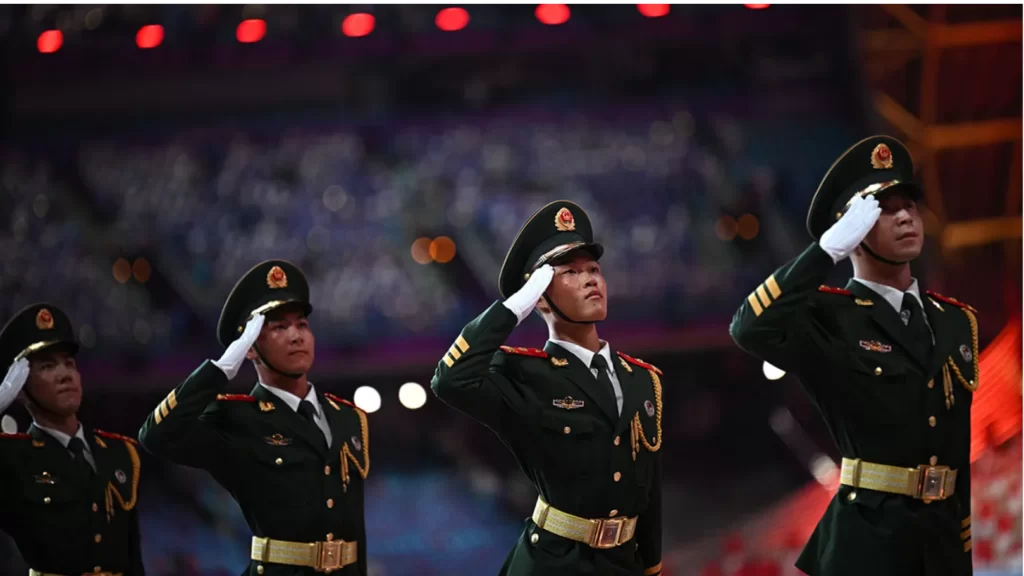
China’s continuing military expansion is drawing increased attention in Washington and raising questions that extend well beyond national defense. A Department of Defense report on military and security developments involving the People’s Republic of China detailed the continued expansion of China’s nuclear forces, missile capabilities, naval power, and information-warfare programs.
For precious metals investors, China’s expanding military capabilities are about more than defense. Rising tensions between the United States and China could affect global trade, supply chains, currencies, energy prices, government spending, and investor confidence—all factors that can influence commodity markets and demand for gold and silver.
Chuck DeVore, chief national initiatives officer at the Texas Public Policy Foundation and a retired Army lieutenant colonel, drew attention to the scale of China’s military expansion while discussing the Pentagon report. DeVore argued that years of U.S. spending on conflicts in the Middle East occurred while China steadily expanded its military capabilities, and he called for greater U.S. emphasis on naval strength, nuclear deterrence, missile defense, and military logistics.
China’s Expanding Nuclear and Naval Capabilities
The Pentagon report describes significant growth in China’s strategic forces. According to the report, China has continued expanding its intercontinental, medium-range, and cruise-missile capabilities while rapidly increasing the size of its nuclear arsenal.
The Defense Department projects that China could possess more than 1,000 operational nuclear warheads by 2030 if the expansion continues. China has also invested heavily in hypersonic weapons and other missile technologies intended to extend the reach and survivability of its forces.
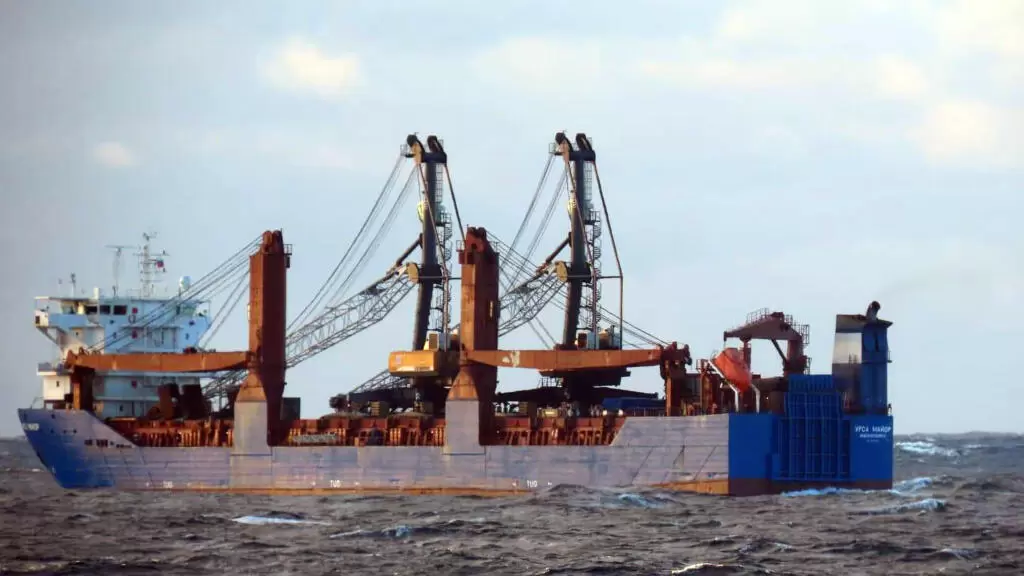
Naval expansion is another major component of China’s military strategy. China already operates the world’s largest navy by number of vessels, and the Pentagon projects that its fleet could grow substantially by 2030.
Why China’s Military Expansion Matters to Commodity Markets
The economic consequences of increasing U.S.-China tensions could extend far beyond military spending.
China is one of the world’s largest consumers, producers, and processors of critical industrial commodities. At the same time, trade between China, the United States, and their respective partners represents a major component of the global economy.
A serious deterioration in relations—or an actual military confrontation—could disrupt shipping routes, manufacturing, energy markets, semiconductor production, critical-mineral supplies, and international trade.
That could create significant volatility across commodities.
Gold could benefit from increased safe-haven demand if geopolitical uncertainty causes investors to seek assets outside traditional financial markets.
Silver presents a different dynamic because it functions both as a precious metal and an important industrial commodity. Geopolitical uncertainty could increase investment demand while disruptions to manufacturing and global supply chains could simultaneously affect industrial demand and supply.
Other commodities, including copper and oil, could also experience significant price movements depending on how a conflict or trade disruption affected global production, transportation, and economic activity.
Information Warfare Is Also Expanding
The Pentagon report also discusses the People’s Liberation Army’s development of what it calls cognitive domain operations, or CDO.
These operations combine traditional psychological warfare and information operations with technologies including artificial intelligence, big-data analysis, communications platforms, and other emerging technologies.
According to the Defense Department, the objective is to influence how populations and decision-makers perceive events and potentially shape their behavior before or during a conflict.
This represents an important evolution in modern geopolitical competition. Economic markets are increasingly influenced not only by military events themselves but also by information, perception, uncertainty, and expectations about what may happen next.
What This Could Mean for Gold and Silver Investors
Geopolitical risk does not automatically mean that gold or silver prices will rise. Interest rates, inflation expectations, the U.S. dollar, central-bank policy, industrial demand, investor positioning, and broader economic conditions all influence precious-metal prices.
However, periods of heightened geopolitical uncertainty have often increased investor interest in gold as a store of value and portfolio diversifier.
Silver occupies an especially interesting position because it sits at the intersection of monetary demand and industrial demand. That means major geopolitical developments involving China can potentially influence silver through several channels at once.
For investors and collectors in Jacksonville and Northeast Florida, developments thousands of miles away can therefore have very real implications for the price of physical gold and silver at home.
Understanding the connection between geopolitics, currencies, government spending, global trade, and commodity markets can provide valuable context when deciding whether physical precious metals have a place in a diversified portfolio.
Source: Fox News reporting on the Department of Defense report and comments by Chuck DeVore.