On Tuesday, November 17, a 1794 Flowing Hair silver dollar, graded MS-62+ by NGC, sold for $1,647,000 at Stack’s Bowers Galleries’ Rarities Night in Costa Mesa, California, CoinWeek reported. It is known as the Austrian-Wittlin-Willing specimen, and it came from the same Alabama family collection that anchored the sale. That is America’s first silver dollar. Not a pattern sitting in a case. A dollar the new Mint actually delivered, and one that has been watched, sold, and watched again for a long time.
This same coin brought $1,050,000 in the same auction house’s sale of the Larry H. Miller Collection in December 2020. That’s about 57% more in six years, on a piece that already had a long, documented life. I’m not going to turn one result into a rule about the market. I will say this . . . when the history is real and the coin has been left alone, serious buyers still show up.
A mint that was still learning how to make a dollar
The Coinage Act of April 2, 1792, authorized a national mint and made the dollar the unit of U.S. money. Getting from a law to a coin was harder than it sounds. The early Mint in Philadelphia depended on private deposits of silver and gold, the equipment was limited, and the first silver that arrived needed heavy refining.
Mint Director David Rittenhouse wanted the silver dollar first, because it was the basic unit of the new currency and the largest silver coin Congress had authorized. The press on hand was better suited to smaller coins. They struck them anyway. On October 15, 1794, Chief Coiner Henry Voigt delivered 1,758 silver dollars to Rittenhouse. That remains the official mintage. Some researchers have argued that about 2,000 may have been struck and that several hundred were rejected for poor strikes; CoinWeek notes that others question whether the larger figure can be established. I am staying with the official number.
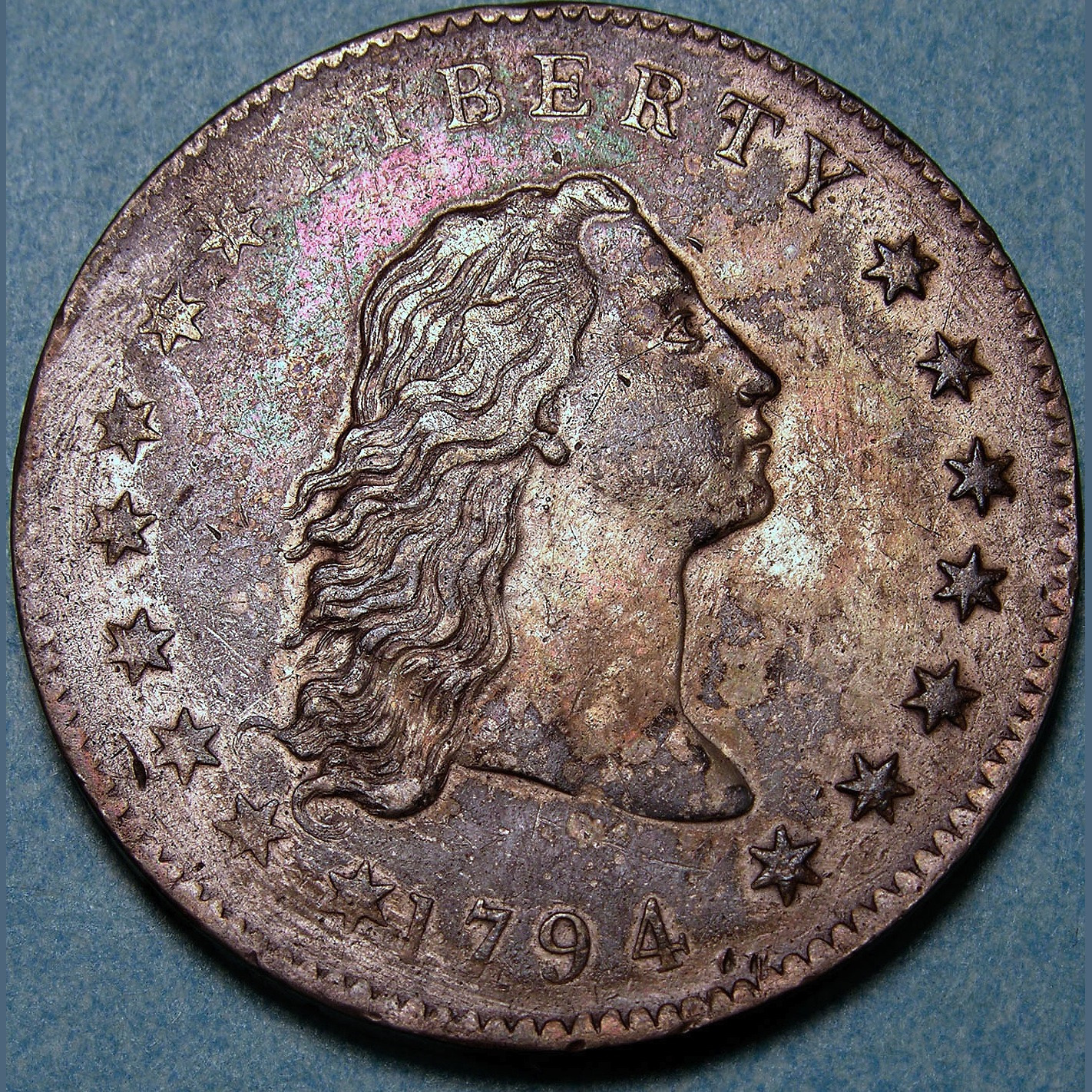
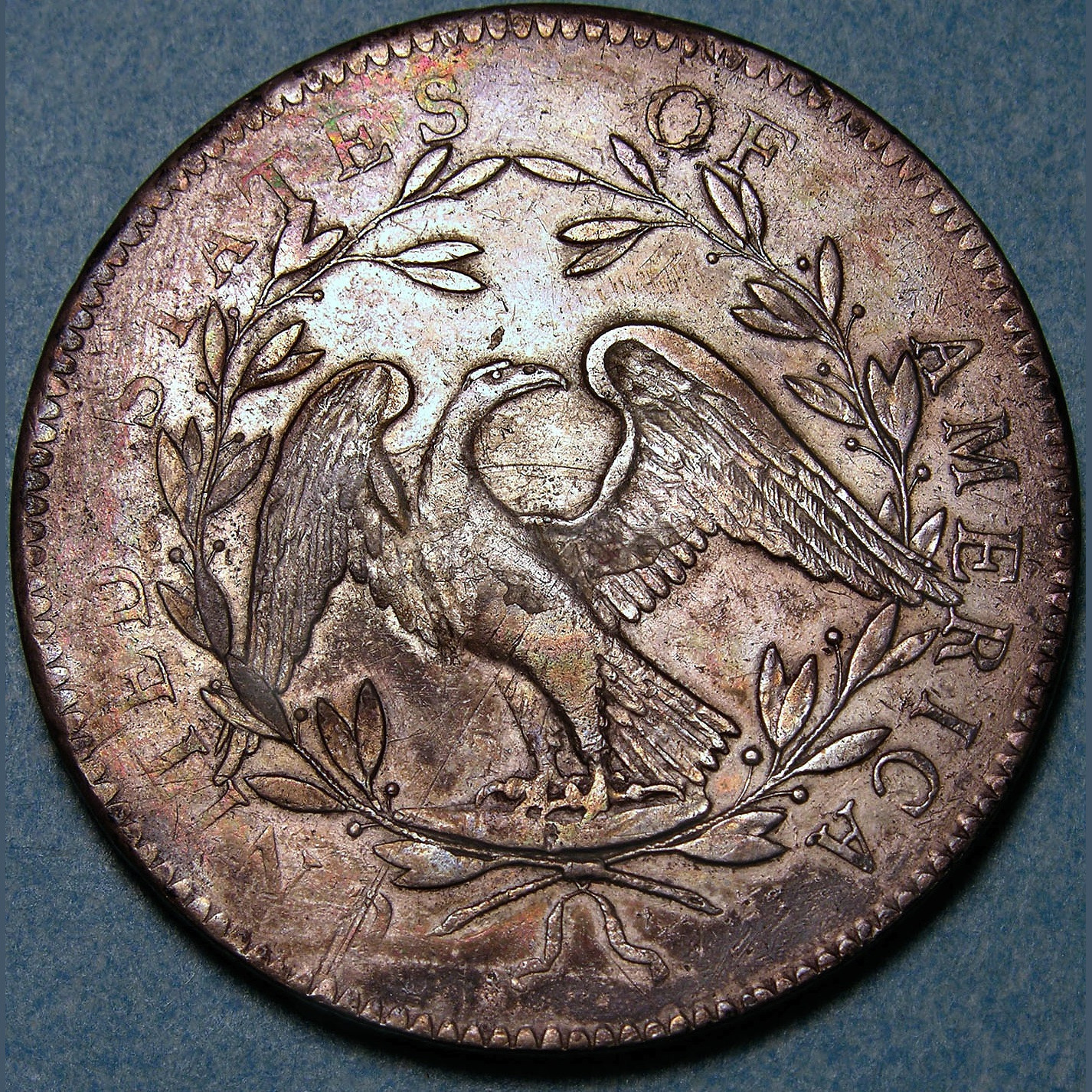
Chief Engraver Robert Scot designed the coin. Liberty faces right, hair flowing, with 15 stars for the 15 states in the Union in 1794. The reverse has a small eagle in a wreath and the words UNITED STATES OF AMERICA. Neither face carries a denomination. That was intentional. The word “dollar” was still new to a lot of merchants, so the Mint let the weight and the silver do the talking, and put the denomination on the edge: HUNDRED CENTS ONE DOLLAR OR UNIT.
Many 1794 dollars show the Mint’s growing pains. The left side of the design is often weakly struck. Workers sometimes filed overweight planchets before striking them, and those filing lines, called adjustment marks, still show on a lot of surviving coins. Those marks are not automatically a defect in the modern sense. They are part of how the first dollars were made.
What collectors look for, and what this one had
Stack’s Bowers estimates that about 135 to 150 examples survive from that delivery of 1,758. Researcher Martin Logies documented 134 distinct pieces in a 2010 census, and broader estimates today still sit near 150, CoinWeek reported. Many are worn, cleaned, or repaired. Mint State coins are scarce.
The Austrian-Wittlin-Willing specimen stands out because of a stronger-than-usual strike and a long paper trail. It is the only die marriage used for the 1794 dollar, cataloged as BB-1, B-1. CoinWeek, drawing on the auction description, notes nearly complete denticles, all 15 stars, a bold date, and relatively few adjustment marks. A shallow, circular planchet flaw on the eagle’s breast helps identify this particular coin through earlier appearances. The earliest reported chapter, an Austrian private collection, remains uncertain. The documented trail includes Paul H. Wittlin, a 1956 ANA auction, the Dr. Edward B. Willing Collection, and later the Larry H. Miller Collection.
For perspective, another 1794 Flowing Hair dollar, graded PCGS MS-63+ and approved by CAC and CMQ, realized $4.5 million at Stack’s Bowers in November 2025, CoinWeek noted. Tuesday’s result is not a record for the date. It is still a lot of money, even when they say it fast, for a coin that began as an experiment on a press that was not quite up to the job.
The Smithsonian photographs above are a circulated example of the type, not this week’s Mint State coin. You can see, even so, why collectors study the strike, the stars, and the surfaces so carefully.
If you think you’ve found one
I won’t pretend the jar on the shelf is a 1794 dollar. Most old silver is later, more common, and that’s all right. Early dollars that do survive are often damaged or cleaned. Modern counterfeits of famous early types also exist. If you have a large old silver coin with flowing hair and a small eagle, don’t clean it, don’t polish the dirt out of the letters, and don’t assume a photo sent to a stranger is a sufficient test. Have someone look at it in hand.
There’s a good chance it is not 1794. There’s also a good chance that a careful look will tell you what it actually is, which is the useful part. That’s a probability, not a promise, and it’s why an honest appraisal still beats a hope.
I’m in this business because I like the history you can hold, and because I think families do better when they know what they have. The first American silver dollar was never a perfect coin. The ones that still mean something are the ones nobody tried to improve.
If you’ve got questions about a collection, an inherited box, or a coin you’re not sure is genuine, come see me at King Philip Coin, 6821 Southpoint Dr N #228, Jacksonville, FL 32216. Call (904) 580-6543 or visit https://kingphilipcoin.com. Monday through Saturday, 12:30 to 5:00. Appointments preferred, walk-ins welcome. You can also start at our page on inherited coin collections.
This is not investment advice . . . think for yourself.