Of the four headline coins from this week’s Stack’s Bowers Rarities Night, this is the one a Florida family is most likely to recognize by type, if not by date.
On Tuesday, November 17, an 1893-S Morgan dollar, graded MS-62 by NGC, sold for $231,800, NGC reported. Ahead of the sale, NGC called the 1893-S the lowest-mintage circulation-strike Morgan, with 100,000 struck at San Francisco in a panic year, and Mint State pieces genuinely scarce. Most Morgan dollars are not this coin. That’s the point. The date, the mintmark, and the condition are what separate a common silver dollar from one that stops the room.
A panic year, and a short run in San Francisco
George T. Morgan’s silver dollar is the one a lot of people mean when they say “silver dollar.” The series ran, with a long gap, from 1878 to 1921, and many dates are common. The 1893-S is not.
In 1893 the country was in a financial panic. Congress repealed the Sherman Silver Purchase Act, which had required large government purchases of silver. Without that mandate, the need to keep striking commercially unnecessary silver dollars faded. PCGS CoinFacts notes that the San Francisco Mint produced just 100,000 Morgan dollars that year, and that the Carson City Mint struck 677,000 before closing its coinage operations shortly thereafter. One hundred thousand sounds like a lot until you put it next to a common date, of which millions were made, and until you remember how many were spent, melted, or simply worn down.
Mint State examples are scarce. PCGS estimates that fewer than 100 uncirculated 1893-S dollars are known today, and that fewer than 10,000 of the original mintage likely survive in all grades. A share of the remaining Mint State coins, PCGS says, seems to have come from a single find in the early 1960s, when dealer John B. Love of Cut Bank, Montana, found 1893-S dollars mixed into an original bag of 1894-S pieces. Even a circulated 1893-S, if it is genuine, is a key date. A common 1881-S in the same worn condition is a different animal entirely.
Look twice at the mintmark, and then look again at whether it’s real
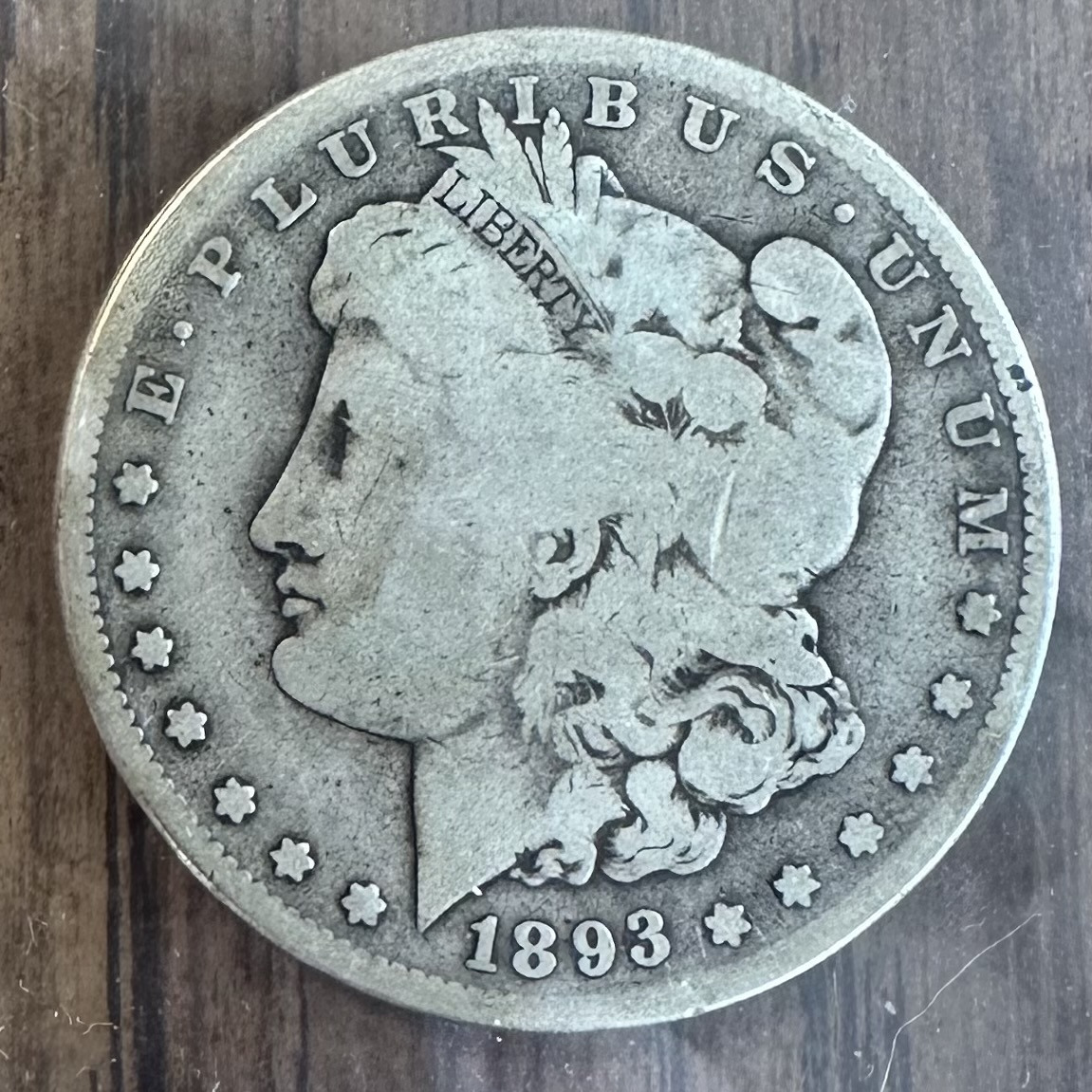
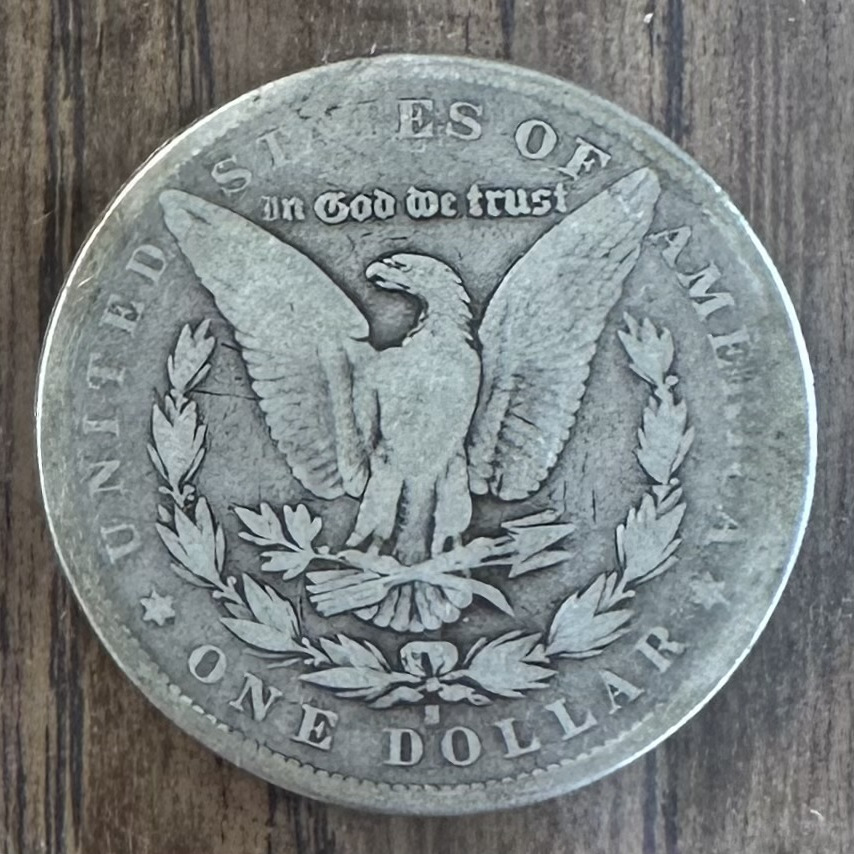
The “S” on the reverse is the whole ball game. Because this date is valuable in almost every grade, it is also one of the most copied, altered, and faked coins in the series. PCGS warns that many counterfeits are made by adding an “S” mintmark to a genuine 1893 Philadelphia dollar, which is a common coin. A genuine 1893-S, the service says, should show no discoloration around the mintmark that might suggest glue or solder, and all genuine pieces were struck from a single obverse die. One oft-cited diagnostic is a small raised line inside the T of LIBERTY, running diagonally near the top center, visible even on many worn examples.
I am not going to pretend that reading a paragraph makes anyone a grader. Diagnostics help, and they can also be faked. The safe path, especially if the price looks friendly, is to have the coin authenticated. Third-party grading from services such as PCGS and NGC is how serious 1893-S dollars get a common language for condition. It isn’t magic. It is how a lot of added mintmarks get caught.
And authenticity is not a side issue. It’s the whole issue.
Last week, WOWT in Omaha reported that Army veteran Chris Bowen spent about $1,500 on 50 silver dollars from an online New York seller, meaning to give them to fellow veterans. A local coin dealer, Chris Holtberg of Millard Jewelry and Coin, tested them on a density machine and said they were fake. The weight was close, Bowen said. The luster wasn’t. “I feel absolutely taken, but I should have known better. The price was too good,” he told the station. He won’t hand them out, and he hopes the Secret Service will take them. Counterfeits turned in to law enforcement, the agency said, are destroyed.
Those 50 coins were not identified in the television report as 1893-S Morgans, or even as Morgans at all. I mention the story because it is the same lesson, on a human scale. A silver dollar can look right, weigh close, and still be wrong. Online bargains are where a lot of that trouble lives.
What this means if you’ve got Morgans in a drawer
So if grandpa left a cigar box of silver dollars, here’s what i’d do. Don’t clean them. Don’t assume a “good date” you read about on a forum is the coin in your hand until the mintmark and the authenticity have been checked in person. And don’t assume the whole box is worthless because it isn’t in the newspapers. There’s a good chance most Morgan dollars in an inherited jar are common dates, and that’s all right. There’s also a good chance that one odd date, or one sharp mintmark, is worth a second look. That’s a probability, not a promise.
The photographs above show a circulated 1893-S, not the Mint State coin that sold for $231,800. You can see the date on the front and the S mintmark on the back. That is exactly where the looking should start.
I’m in this business because I like the history you can hold, and because I think families do better when they know what they have. The coin that usually holds up best is the one nobody tried to improve.
If you’ve got questions about a collection, an inherited box, or a coin you’re not sure is genuine, come see me at King Philip Coin, 6821 Southpoint Dr N #228, Jacksonville, FL 32216. Call (904) 580-6543 or visit https://kingphilipcoin.com. Monday through Saturday, 12:30 to 5:00. Appointments preferred, walk-ins welcome. You can also start at our page on inherited coin collections.
This is not investment advice . . . think for yourself.