Every so often a sale comes across the papers that makes you look twice, not because you expect to find the same coin in a kitchen drawer, but because the story behind it is almost as rare as the piece itself.
On Tuesday, November 17, Stack’s Bowers Galleries of Costa Mesa, California, sold an 1885 Trade Dollar for $1,952,000. AL.com reported the sale, and Popular Science said the auction house confirmed a price of just over $1.95 million. The coin is graded Proof-63+ by PCGS and approved by CAC. It is one of only five known. Stack’s Bowers calls it the Olsen-French specimen, and it came from a collection listed simply as Property from an Alabama Family.
AL.com’s headline said $1.925 million. The story itself, and the auction house’s confirmation, both put the figure at $1,952,000. I went with the number in the body and the confirmation.
A dollar made for the other side of the ocean
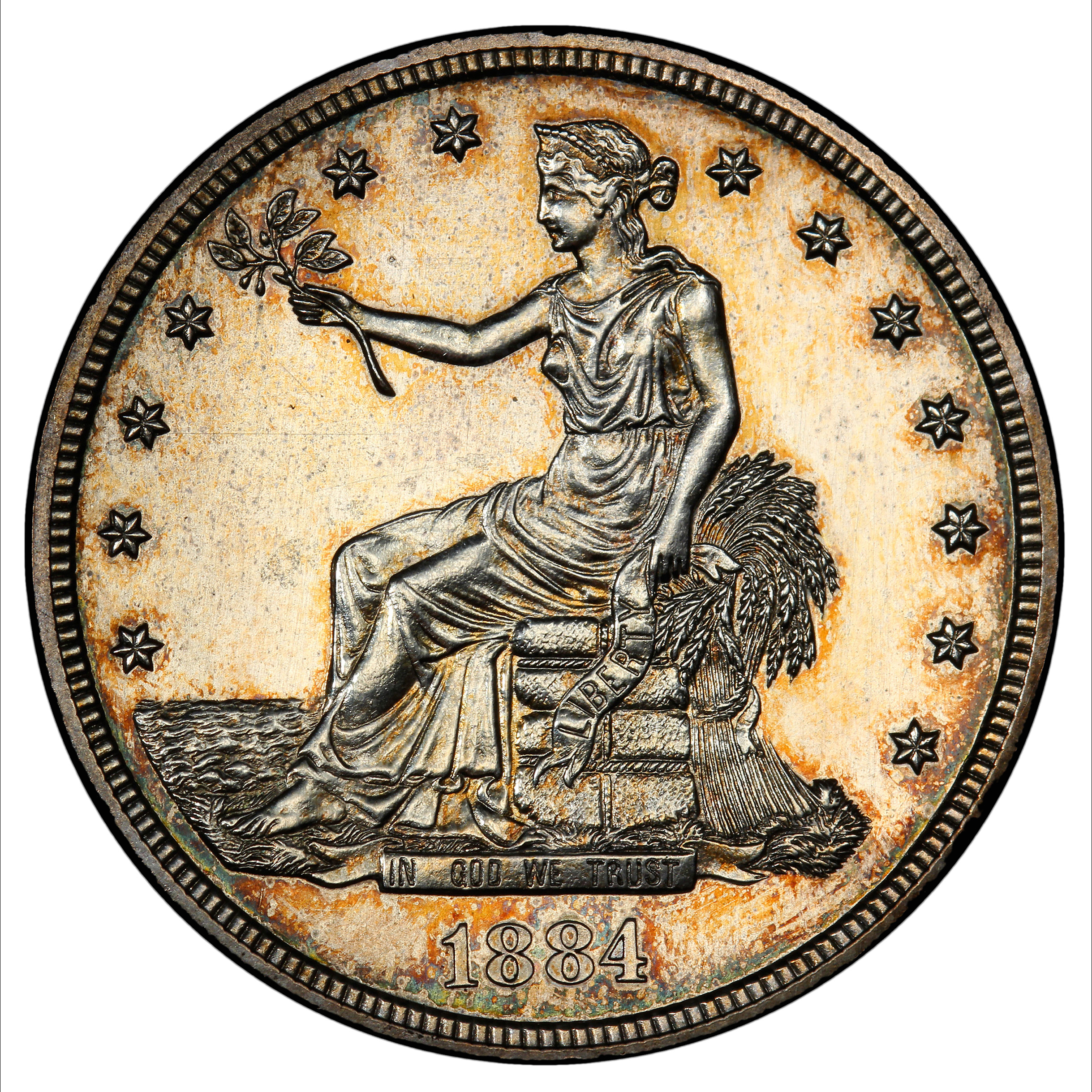
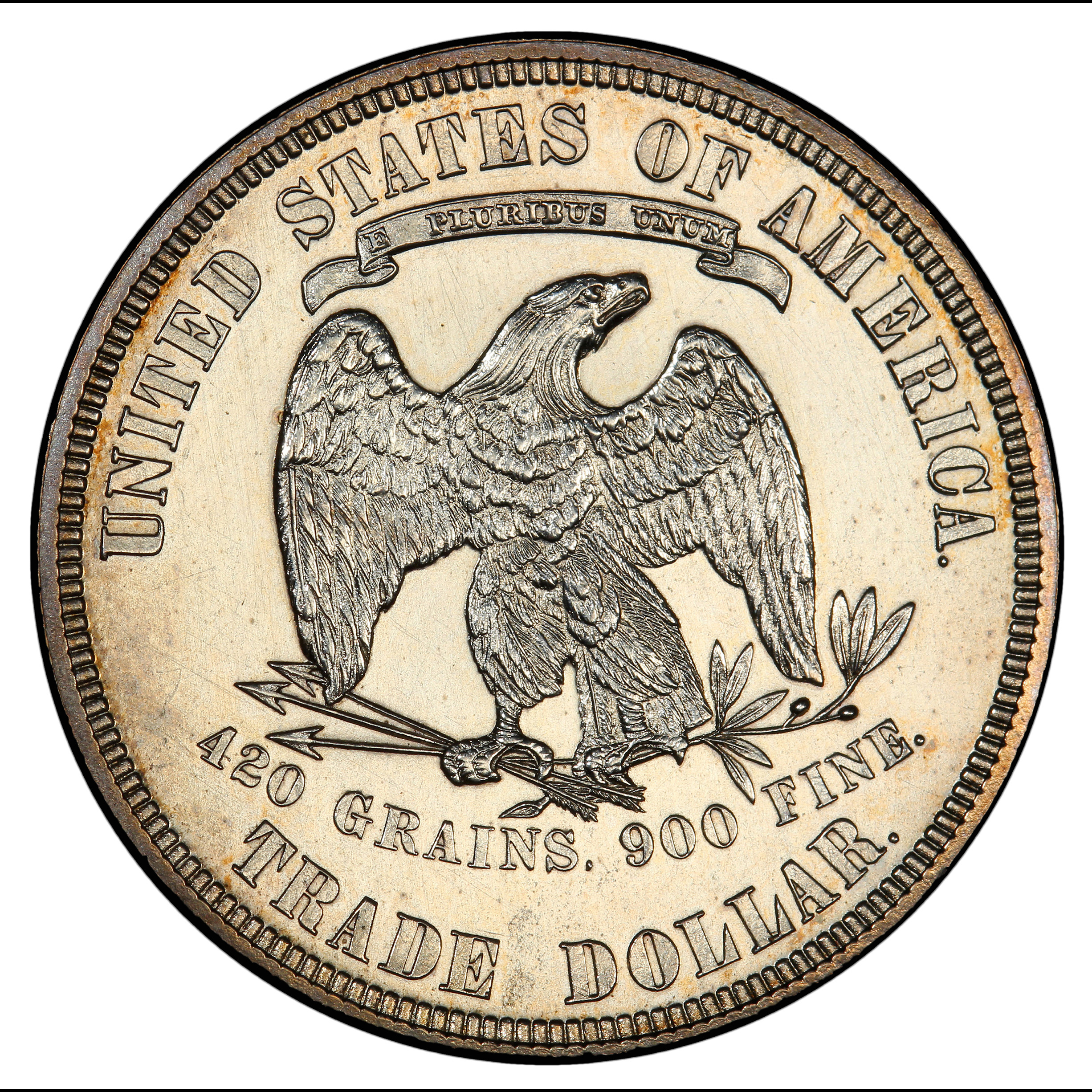
Trade Dollars were never meant to be the silver dollar in your change. Congress authorized them in 1873 so American merchants would have a coin that could compete in East Asian commerce, especially against the familiar Mexican silver dollar. William Barber designed the piece. Liberty sits on a bale of merchandise, and the reverse is unusually plainspoken for a U.S. coin: it states the weight and fineness right on the face, “420 GRAINS. 900 FINE. TRADE DOLLAR.”
They had a short and awkward life at home. In July 1876, Congress revoked their legal-tender status. Circulation strikes ended in 1878. The Philadelphia Mint kept making proofs for collectors through 1883, and then the official record goes quiet.
Here’s the part that stays with me. According to the auction house, exactly five proofs dated 1885 were then struck quietly at the Philadelphia Mint, never entered in the official Mint reports, and unknown to collectors until 1911. Stack’s Bowers says it seems likely A. Loudon Snowden, the Mint’s superintendent, who retired that June, “purchased all five from the Mint cashier for himself.” Documents, they admit, “are silent on many of the details.” Research later found in Charles Barber’s papers, PCGS CoinFacts notes, helped show that the 1884 and 1885 pieces were in fact made in the years they are dated, not cooked up later as a collector’s afterthought.
In other words, this is a coin the government never quite owned up to making. All five are accounted for. The first one to cross a public auction block, Stack’s Bowers has said, appeared in 1913 and brought $1,140. On Tuesday, one of the five brought nearly two million dollars.
This specimen, and the ones that came before
This same Olsen-French specimen last sold publicly in March 2020, when Stack’s Bowers reported it realized $1,320,000 at a grade of Proof-64. Six years later it crossed the block a little differently, as a Proof-63+ with CAC approval, and still brought more. I’m not going to turn one coin into a rule about the market. I will say this . . . when a piece is genuinely rare, authentic, and carefully preserved, serious buyers still show up.
It is not the record for the date. The finest of the five, the Eliasberg specimen, graded Proof-66 by NGC, sold for $3,960,000 at Heritage Auctions in January 2019. That is useful context, and a reminder that even among five coins, condition and pedigree still move the needle.
A sister issue dated 1884, of which ten are known, has the same unofficial flavor. The photographs above show one of those 1884 proofs, from the Smithsonian. It is the closest freely licensed look at the type I can put on the page, and it is not this week’s coin.
If you have a Trade Dollar, look carefully. If you think you have this one, slow down.
I won’t pretend the coins in a kitchen drawer are an 1885 Trade Dollar. The odds of that are about the odds of finding a signed letter from George Washington under the good china. What you might find, if a grandparent traded in the Pacific or kept odd silver, is an earlier Trade Dollar from the 1870s. Many of those spent time in Asian commerce and carry chopmarks, little merchant stamps that are part of the coin’s working life. Those are historically interesting in their own right. They are not this rarity.
Authenticity still matters, even on the more common dates. Modern counterfeits of U.S. trade and silver dollars turn up, and a coin can look right at a glance and still be wrong. Don’t clean an old Trade Dollar to make it pretty. Cleaning is one of the surest ways to make a real coin worth less. And don’t take an online bargain at face value. If you’re not sure what you have, the straight path is to have someone look at it in hand, with the lights on and the tools out. Third-party grading from services such as PCGS and NGC is how the big auction coins get a common language for condition. It isn’t magic, and it isn’t necessary for every worn piece in a jar. It is how serious rarity gets identified, and how fakes get a lot harder to pass.
There’s a good chance most of what’s in an inherited box is ordinary, and that’s all right. There’s also a good chance that one odd date is worth a second look. That’s a probability, not a promise.
I’m in this business because I like the history you can hold, and because I think families do better when they know what they have. The Alabama collection didn’t get that way by accident. Somebody, years ago, paid attention, kept the coins authentic, and didn’t shine them up for company.
If you’ve got questions about a collection, an inherited box, or a coin you’re not sure is genuine, come see me at King Philip Coin, 6821 Southpoint Dr N #228, Jacksonville, FL 32216. Call (904) 580-6543 or visit https://kingphilipcoin.com. Monday through Saturday, 12:30 to 5:00. Appointments preferred, walk-ins welcome. You can also start at our page on inherited coin collections.
This is not investment advice . . . think for yourself.