On Tuesday, November 17, Stack’s Bowers Galleries sold a 1792 half disme — that’s the early spelling for a small five-cent silver piece, and one of the first coins of the new United States — for $671,000, according to NGC. It is graded MS-65 by NGC, carries the Garrett pedigree, and is unsurpassed in the NGC Census. It came from the same Alabama family collection that led Rarities Night.
Collectors sometimes argue over how to say the word. Jeff Garrett, writing for NGC, says disme is an old French word, pronounced “deem.” However you say it, the coin is tiny, and the story around it has always been larger than the piece itself.
The legend, and the record in Jefferson’s own book
For a long time, the favorite story was that President George Washington put his own household silver into the melt, and that the face on the coin was Martha Washington. Those stories have been told since the 1840s. They are legends, not facts, Garrett writes.
The documented story is better, and it is newer in the telling. Research by Pete Smith, Joel J. Orosz, and Leonard Augsburger, published in 1792: Birth of a Nation’s Coinage and summarized by Garrett and the American Numismatic Association, centers on Thomas Jefferson, then secretary of state. Jefferson recorded in his memorandum book that he “Delivd. 75.D at the mint to be coined” on July 11, 1792, and “Rec’d from the mint 1500. half dismes of the new coinage” on July 13. He left Philadelphia that same day for Monticello. The little silver pieces — 1,500 coins from a $75 deposit — appear to have been spent as ordinary small change on the trip.
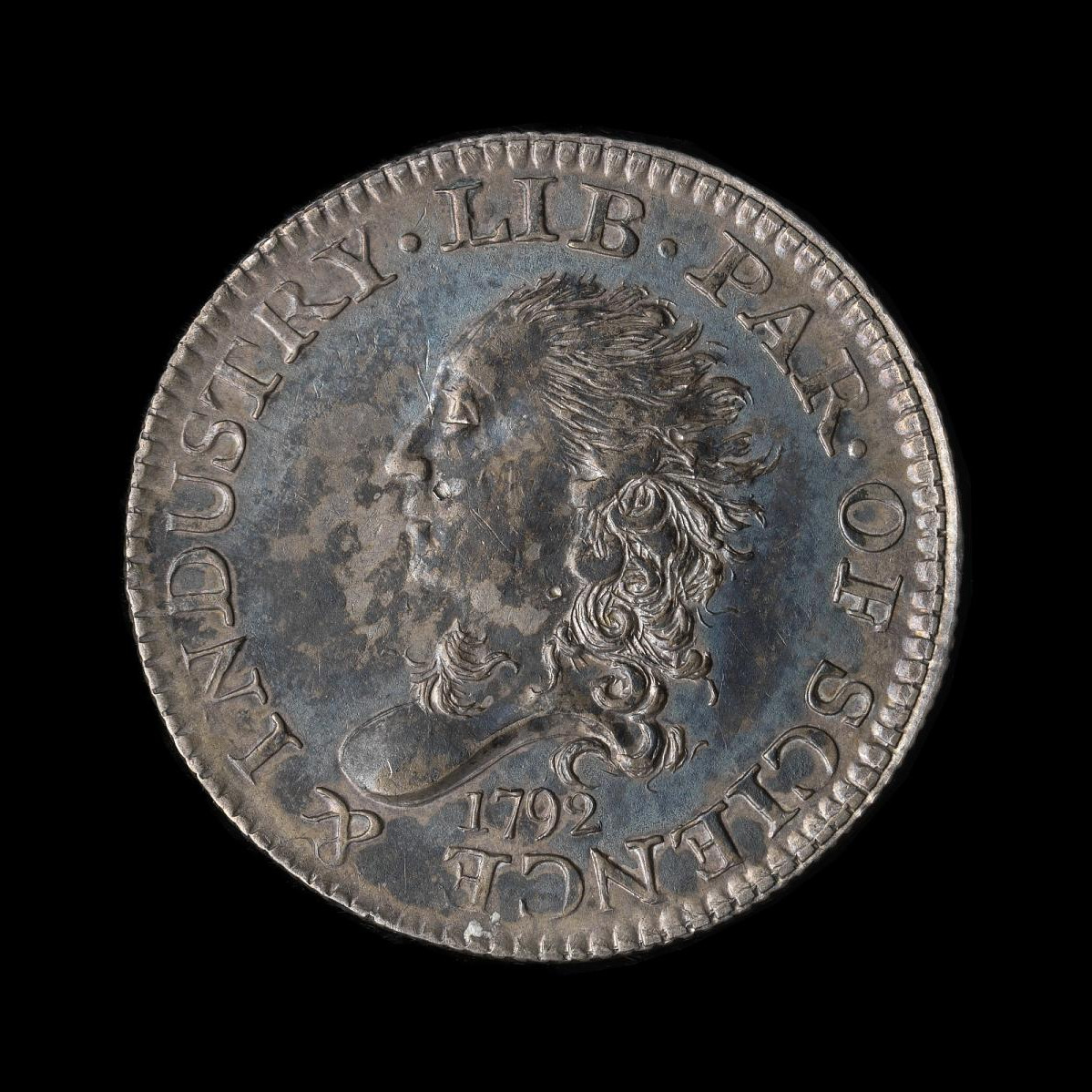
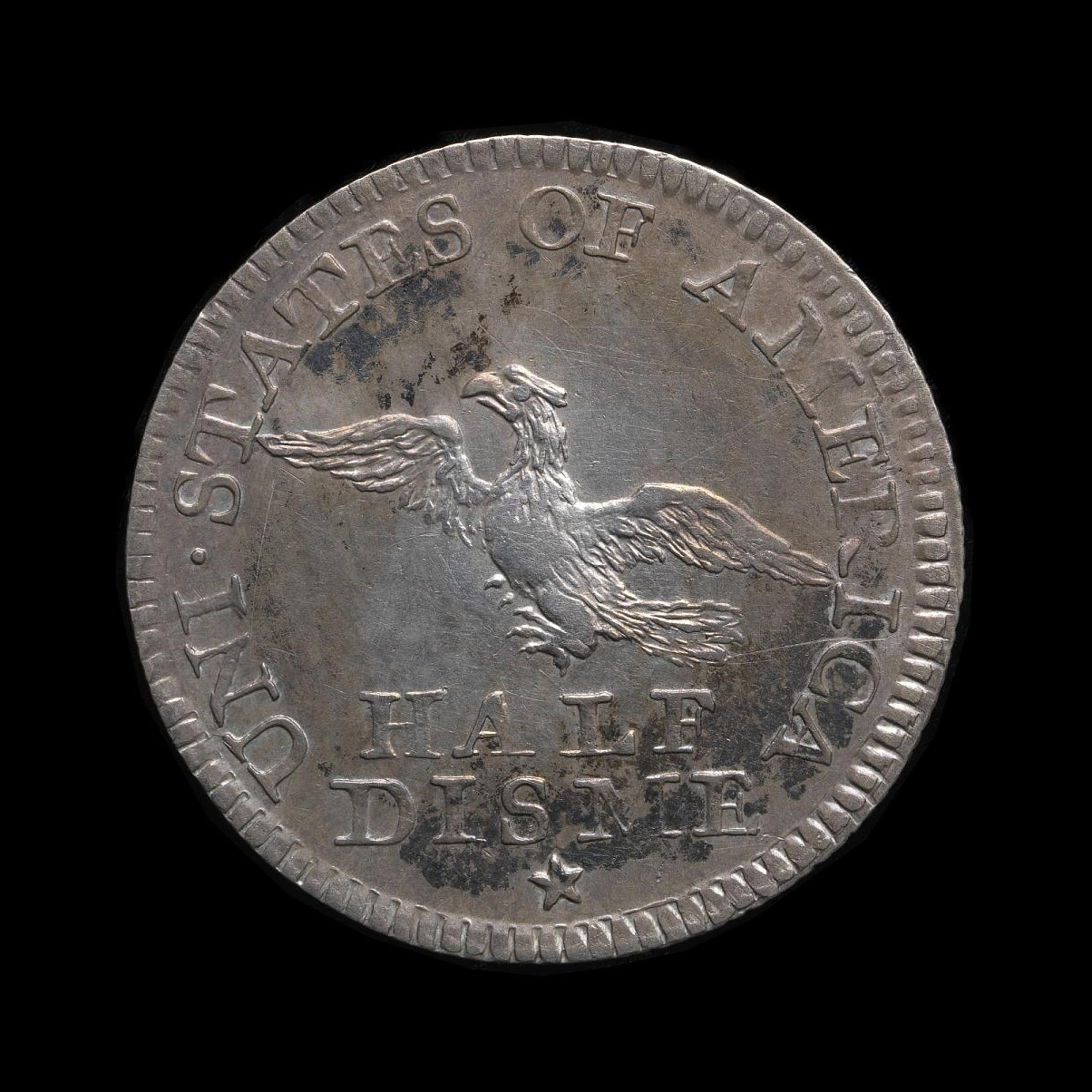
They were not struck in a finished mint building. In July 1792, before the new Mint was ready, the coins were made in the cellar of Philadelphia saw-maker John Harper’s shop, near the site of the future Mint. The obverse shows Liberty and the words LIB. PAR. OF SCIENCE & INDUSTRY, with the date 1792. The reverse has a flying eagle and the denomination, HALF DISME.
Were they patterns, or real coins? Some catalogs still treat them as patterns, in part because they were struck off the Mint’s own premises and because regular half dimes did not follow until 1794. A mintage of 1,500, and the fact that they were spent, is why other researchers, and the modern Red Book listing, treat them as regular coinage. President Washington, in his annual message to Congress on November 6, 1792, reported that there had been “a small beginning in the coinage of half dimes, the want of small coins in circulation calling the first attention to them.” I am using the wording in the American Presidency Project transcript. Either way, the first magistrate was telling Congress that a start had been made.
The ANA notes that die studies also point to a later striking of several hundred more pieces in October 1792, once mint equipment was being tested. The well-documented figure remains Jefferson’s 1,500.
How many are left, and what this one is
The ANA estimates that about 250 to 300 half dismes survive. CoinWeek has used a figure of about 275. Many are low grade. Quite a few are holed, probably because someone once wore one as a keepsake of the country’s first coinage. Problem-free coins are scarce, and buying certified examples is, as Garrett says, a must in every grade.
This week’s coin is a different animal: Mint State-65, with a Garrett pedigree, and at the top of the NGC Census. It is not the finest half disme ever sold. In 2018, the piece long associated with first Mint Director David Rittenhouse, graded PCGS MS-68, sold for $1,985,000 through Classic Coin Company. That sale is useful context. Tuesday’s result still tells you what a carefully preserved, well-pedigreed example can bring.
The Smithsonian photographs above are an example of the type, not this week’s Garrett coin.
What this means if you have a tiny old silver coin
I won’t pretend the change jar is a 1792 half disme. Most small old silver is later, and that’s all right. Copies and modern replicas of famous early coins exist, and some are marked COPY, as they should be. If you have a little silver piece with a flying eagle and the odd spelling DISME, don’t clean it, don’t enlarge a hole, and don’t take a bargain-price “rarity” online at face value. Have someone look at it in hand.
There’s a good chance it is not 1792. There’s also a good chance that a careful look will tell you what it is. That’s a probability, not a promise.
The thing I like about this coin is simpler than the auction price. A Founding Father left a written record of walking silver into the mint and walking coins out, and then spending them like anybody else who needed to make change. That is history you can hold . . . if you are lucky enough to hold one, and honest enough to find out whether it is real.
If you’ve got questions about a collection, an inherited box, or a coin you’re not sure is genuine, come see me at King Philip Coin, 6821 Southpoint Dr N #228, Jacksonville, FL 32216. Call (904) 580-6543 or visit https://kingphilipcoin.com. Monday through Saturday, 12:30 to 5:00. Appointments preferred, walk-ins welcome. You can also start at our page on inherited coin collections.
This is not investment advice . . . think for yourself.