Why Is the Netherlands Moving Billions in Gold?
What an 86-Tonne Central Bank Move Tells Us About Gold and Silver Right Now
When a major central bank quietly moves billions of dollars’ worth of gold, I pay attention. Fifty years of watching this business has taught me that these moves rarely happen for no reason.
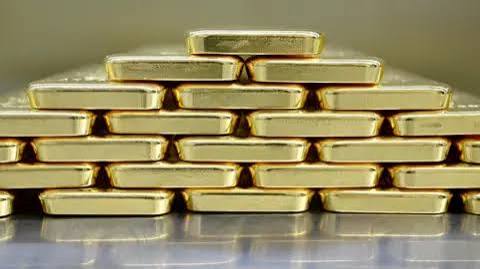
The Netherlands has moved roughly 86 metric tonnes of its national gold reserves out of storage in the United States and Canada, shifting a much bigger share of its gold to London.
That move happened between March and August of this year, and it’s more than a quarter of the nearly 313 tonnes the Dutch had sitting in North America.
Officially, De Nederlandsche Bank (DNB), the Dutch central bank, says the move improves the tradability, geographic diversification, resilience, and crisis preparedness of its gold reserves. Those are all reasonable reasons. But they raise a question I can’t shake: why is one of Europe’s major central banks making its gold easier to access and deploy during a crisis right now?
If you own gold and silver, or you’ve been thinking about it, I think the answer is worth a closer look.
The Netherlands Still Owns More Than 600 Tonnes of Gold
First, let me be clear about what this isn’t. The Netherlands isn’t selling off its gold reserve. Quite the opposite.
DNB still holds about 612.4 tonnes of gold, worth roughly €72.2 billion at the end of last year. What changed isn’t how much gold they have — it’s where that gold sits, and how fast they believe they could put it to use in a real financial crisis.
Before this move, Dutch gold was spread out roughly like this: 31.3% in New York, 19.7% in Ottawa, 18.1% in London, and 30.8% at home in the Netherlands.
After the relocation, it looks like this: 18.5% in New York, 18.5% in Ottawa, 32.1% in London, and 30.8% still in the Netherlands.
London is now the largest foreign home for Dutch gold. I don’t think that’s an accident.
Why London?
London is still one of the world’s most important centers for trading physical gold.
Gold held at the Bank of England meets the international standards needed for fast institutional trading and settlement. In a real crisis, DNB believes gold sitting there can be put to work faster than gold sitting in New York or Ottawa.
The way they actually did the move is worth noting, too. DNB didn’t just load 86 tonnes of bars onto a plane and fly it across the Atlantic.
About 59 tonnes held in New York were sold and replaced with equivalent gold already in London. More than 27 tonnes were physically shipped from the U.S. and Canada to the Netherlands, while a similar amount of internationally tradable gold moved from the Netherlands to London.
That let them avoid melting down and recasting older bars unnecessarily, while also testing more than one method of moving national gold reserves.
DNB actually said outright that having experience with multiple relocation methods could matter if they ever need to move gold again during a future crisis and one method isn’t available. That’s the kind of thinking central banks do when they’re planning for risks they take seriously.
Gold Is Still the “Anchor of Trust”
Here’s the part of this story that stuck with me more than the tonnage. It’s how the Dutch central bank described gold itself.
DNB calls gold an “anchor of trust,” and says it’s particularly well suited to protect against extreme systemic risk.
DNB Governor Olaf Sleijpen said the bank expects it will probably never need to use the gold — but it still needs to strengthen its resilience and readiness.
Sit with that for a second. After decades of electronic banking, fiat currencies, enormous sovereign debt, cryptocurrencies, and digital payments everywhere you look, one of Europe’s central banks still keeps more than 600 tonnes of physical gold on hand as protection against a real failure of the financial system.
That tells me something. Gold still matters most exactly when confidence matters most.
Central Banks Are Treating Gold as Strategic Money
The Dutch move is one piece of a much bigger conversation happening worldwide.
Central banks don’t hold gold because it pays interest. It doesn’t. They hold it because physical gold has qualities almost nothing else in a reserve portfolio has.
Gold has no corporate issuer. It can’t go bankrupt. It doesn’t depend on a government’s promise to repay a bond. Physical bullion held directly doesn’t need a commercial bank to stay solvent, and it’s served as a recognized store of value across currencies, governments, and financial systems for centuries.
That matters most during periods of real geopolitical instability. When Russian foreign-exchange reserves were frozen after the invasion of Ukraine, it showed clearly that a country’s reserves held abroad can get pulled into a geopolitical fight. Whatever you think about that situation politically, the monetary lesson was plain: where your reserves sit matters.
Russia isn’t the only example. Disputes over Venezuela’s gold held at the Bank of England showed the same thing — questions about government recognition and international politics can affect a country’s access to its own gold once it’s held outside its borders.
Moving Dutch gold to London doesn’t erase geopolitical risk. But it tells me the Netherlands is thinking hard about where its gold sits, how fast it can be traded, and how it might actually get used in a real crisis. That’s not a small thing.
What This Means for You as a Gold and Silver Investor
You and I obviously don’t operate like a central bank. But there’s a real lesson here.
Central banks diversify their reserves because they know relying on one asset, one currency, one institution, or one financial system is a risk. I think that principle applies to individuals too.
Physical gold and silver give you a kind of diversification that stocks, bonds, and cash simply can’t fully replace.
That doesn’t mean you should put every dollar into precious metals. Gold and silver prices move, sometimes a lot, and I always tell people to think about metals within the context of their whole financial picture.
But owning physical gold and silver gives you exposure to something tangible, outside the paper financial system. And right now, there are several real reasons more investors are taking that seriously.
Why Now May Be One of the Best Times to Own Gold and Silver
Gold has already had a big run, and I get why some people wonder if they’ve “missed it.”
I think that’s the wrong question. The better question is what actually drove investors and central banks toward gold in the first place — and whether any of that has gone away. It hasn’t.
Government debt is still enormous. Geopolitical tension is still elevated. Currency and monetary policy uncertainty haven’t gone anywhere. Central banks are still treating gold as a serious reserve asset. And now the Dutch central bank is explicitly making its own gold easier to use in a severe crisis.
Gold isn’t valuable just because the price is going up. Gold matters most when confidence in currencies, governments, debt markets, or financial institutions is being questioned.
Silver adds something gold doesn’t. Unlike gold, silver carries both monetary demand and heavy industrial demand — so when you buy physical silver, you’re holding something that’s historically been a store of value and also gets consumed across a huge range of industrial uses.
Silver’s lower price per ounce also makes it a more accessible entry point for people who aren’t ready to buy full ounces of gold.
For a lot of the people I talk to, it isn’t really gold or silver. It’s gold and silver.
Don’t Wait for the Crisis to Start Buying Crisis Protection
Here’s something I’ve seen play out more than once in fifty years: everybody wants a safe-haven asset the moment the reason for owning it becomes obvious to everyone else.
By then, premiums go up, inventory gets tight, and you’re competing with a lot of other buyers for the same coins and bars.
The Dutch central bank isn’t waiting for that moment. They’re positioning their gold now. I think that’s worth paying attention to.
Nobody actually knows what the next financial crisis looks like, when it shows up, or exactly what sets it off. Anyone who tells you they do is guessing. But you don’t need to predict the future perfectly to prepare for it — you just need to recognize the risk before everyone else decides it’s real.
If you’re concerned about inflation, government debt, currency purchasing power, geopolitical instability, banking risk, or simply keeping some of your wealth outside the traditional financial system, I think right now is one of the more compelling times in decades to start building a position in physical gold and silver.
Looking to Buy Gold or Silver in Jacksonville, Florida?
At King Philip Coin, I buy and sell physical gold, silver, bullion, rare coins, U.S. and foreign currency, and precious-metal collections.
If you’re in Jacksonville, Northeast Florida, or anywhere nearby and you’re thinking about adding physical precious metals to what you own, I’m happy to walk you through the options — from fractional gold and widely traded bullion coins to silver rounds, bars, and everything in between.
I also buy gold and silver from individuals, estates, and collectors — bullion, coins, inherited collections, and larger precious-metal holdings.
Don’t wait until the next financial crisis sends everyone looking for physical metal at the same time.
Whether you’re buying your first silver coins, adding to an existing gold position, or looking to sell or get an honest read on metals you already own, call or text King Philip Coin in Jacksonville, or stop by to talk it through.
Central banks understand why gold still matters. I think individual investors should understand it too.
Sources & Further Reading
For anyone who wants to read the original reporting, here’s where this came from:
De Nederlandsche Bank (DNB), “DNB Improves Tradability of Gold Reserves,” September 2, 2026.
NOS Nieuws, “Nederland haalt groot deel van de goudvoorraad weg uit de VS en Canada,” September 2, 2026.
BBC News, reporting on the Dutch central bank and relocation of Netherlands gold reserves.
NBC News, reporting on the Dutch central bank’s shift of gold reserves from North America.
Reuters, precious-metals market coverage and reporting on the Dutch central bank’s 86-tonne gold relocation.
De Nederlandsche Bank, “Gold” — information regarding the Netherlands’ national gold reserves and gold’s role as an anchor of trust.
Armstrong Economics, commentary and analysis concerning the Netherlands’ relocation of gold reserves and geopolitical risk.