It used to be that a country at war might try to wreck an enemy’s money by flooding the place with fakes. These days the same idea has a new tool. You don’t have to devalue a currency with a forger’s press. You can break into the financial system itself and shake people’s confidence in it.
That sounds like a speech, I know. It isn’t. It’s an old story with a new address, and you can hold the first chapters of it in your hand.
The best fakes of the last war
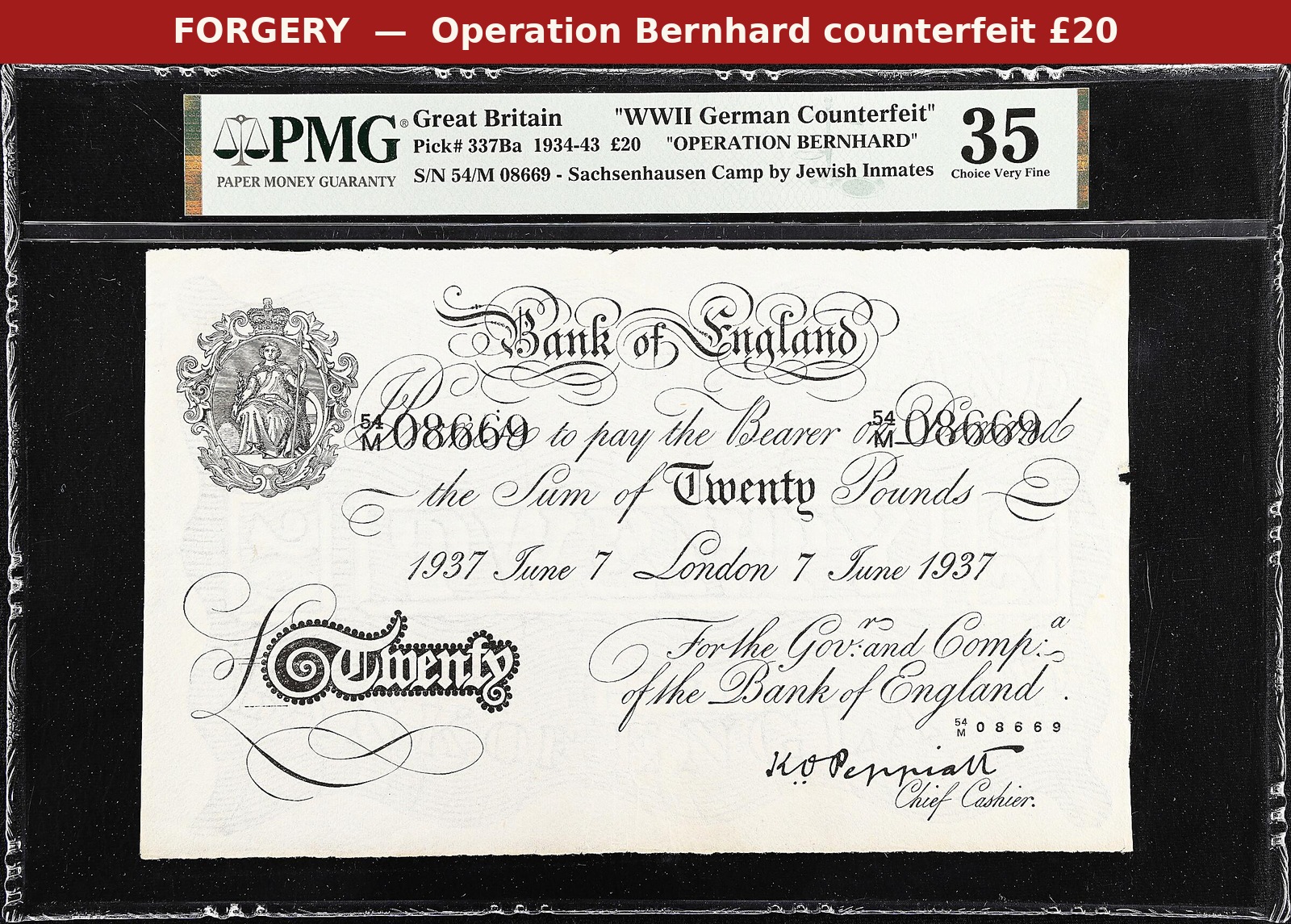
During the Second World War, Nazi Germany ran a counterfeiting operation named for the SS officer who led it, Major Bernhard Krüger. The Bank of England says the work began in 1940 as Operation Andreas and was revived in 1942 as Operation Bernhard. The first hope was to flood Britain with fake notes and shake the economy. As the war went on, the notes were also used to pay spies and to buy supplies, including gold.
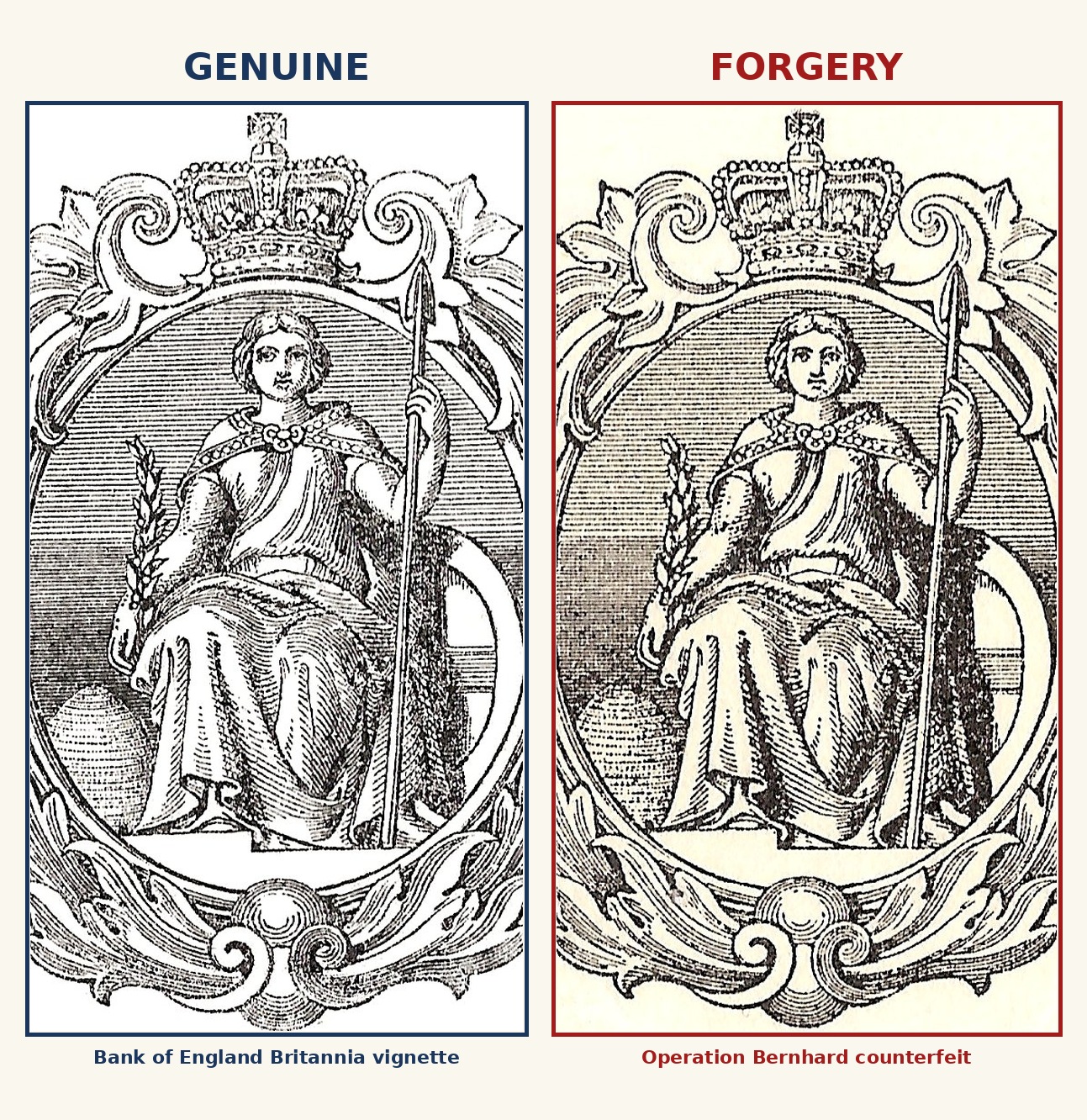
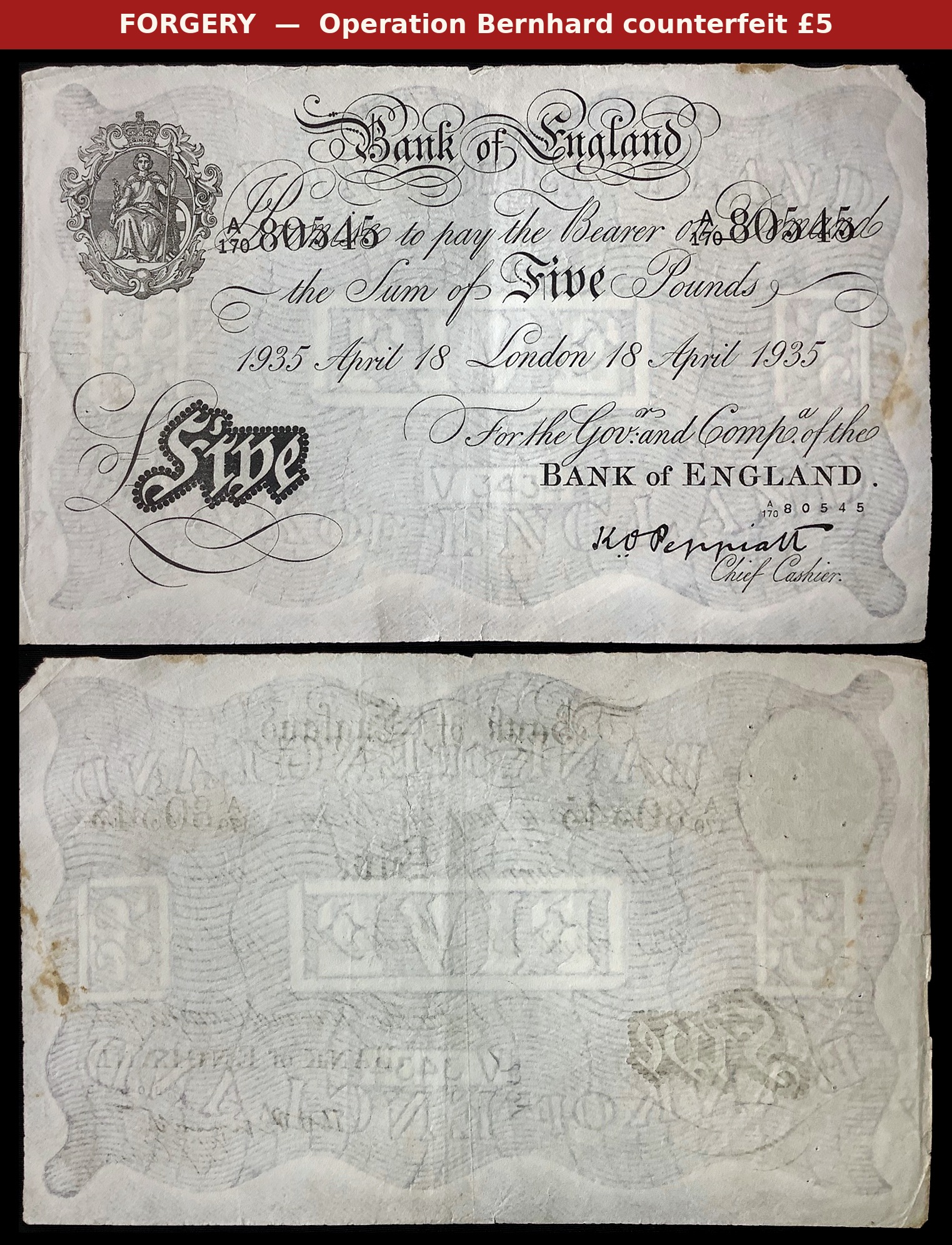
Krüger assembled 142 Jewish prisoners at Sachsenhausen, the concentration camp near Berlin, men who knew engraving, printing, graphics, and banking. They studied genuine notes until they had found about 150 tiny, intentional flaws the Bank had planted as security marks. They forged the paper, the signatures, and the little seated figure of Britannia in the corner, then rubbed and folded the notes so they would look already used. The result, the Bank says, was a counterfeit "indistinguishable to the eye from a genuine note."
They printed the £5, the £10, the £20, and the £50. What they could not do was crack the Bank’s numbering system, so they reused serial numbers from real notes. That was the crack in the work. In 1943, a counterfeit passed through a British bank in Morocco. A clerk checking the ledgers saw that the serial number in front of him had already been "paid." Once the Bank understood the problem was widespread, it withdrew from circulation every note with a face value higher than £5.
How many were made? Honest people give different figures. The Sachsenhausen memorial says the prisoners’ own secret statistics put the face value at more than £135 million. The BBC, citing the Bank of England Museum, reports an estimate from Oskar Stein, a prisoner who kept the books: about nine million notes, worth about £5 billion in today’s money. I will not pretend I can referee those numbers from Jacksonville.
When the war was ending, the prisoners were moved to Austria and, the Bank says, liberated by U.S. forces on May 6, 1945. Most of the leftover notes are thought to have been thrown into Lake Toplitz. Divers found boxes of counterfeit £5s in 1959. Early newspaper reports talked of around £700 million; later the papers said the recovered notes had a face value of £9 million and were destroyed at the Austrian National Bank. The Bank of England reports those as press figures, and so am I. Britain did not bring the £10 back until 1964, the £20 until 1970, or the £50 until 1981.
This is an old kind of war
The Nazis did not invent the idea. They industrialized it.
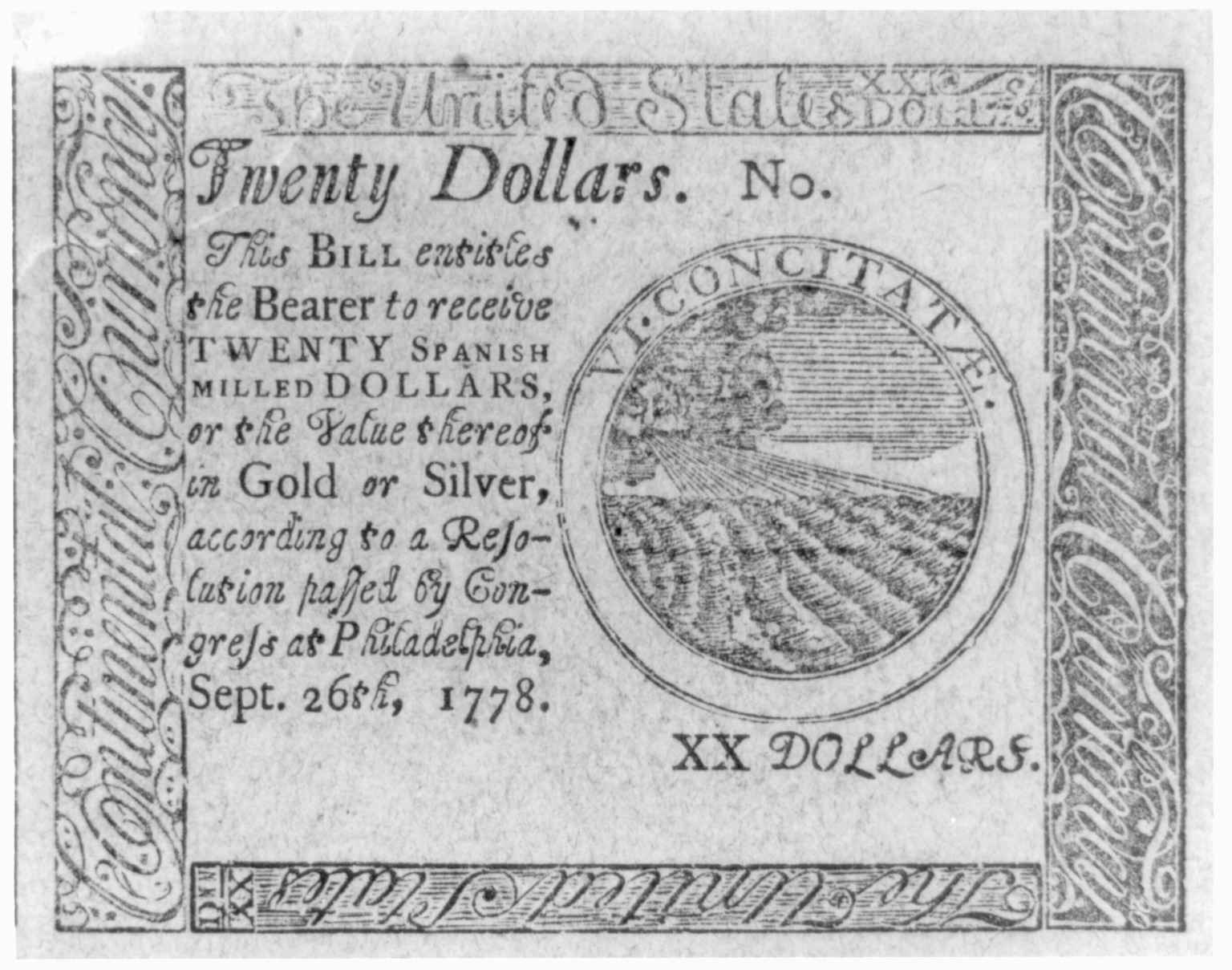
In the American Revolution, Congress paid for the war with Continental currency. Too much of it was printed, and that alone would have been trouble. The British made it worse on purpose, pushing counterfeit Continentals into the states from occupied New York. Benjamin Franklin later wrote, in a 1786 essay called "The Retort Courteous," that artists employed by the British performed so well that immense quantities of those counterfeits circulated in all the states before the fraud was detected. The American Numismatic Association notes that by April 1780, the exchange was about $40 in paper for $1 in silver or gold. People still say "not worth a Continental." I will not blame every bit of that on the forgeries. Overprinting did plenty of the work. The fakes added quantity, and they added doubt, which is often the heavier of the two.
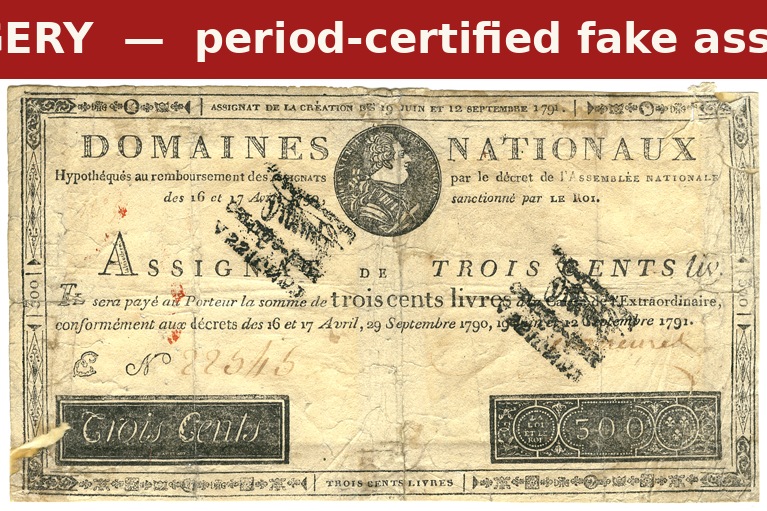
The same play ran in Europe. In 1793 and 1794, according to the journal of Sir John Swinburne, later summarized by the Mills Archive, William Pitt’s government had a vast number of French assignats fabricated in England and poured into France from Flanders and the Brittany coast. French paper was already in deep trouble from overissue. The forgeries were not the only reason assignats failed, but they were one more way to go after confidence.
Napoleon used the same weapon. After his 1809 victory at Wagram, according to a Fondation Napoléon account of work by Arnaud Manas of the Banque de France, he ordered the large-scale forging of Austrian banknotes, the Banco-Zettel. About 40 million florins’ worth were produced. Austria withdrew that paper in 1811. Later attempts, including Russian ruble notes, went less well; some of the rubles even carried spelling errors. Even an emperor can misspell his way out of a good fake.
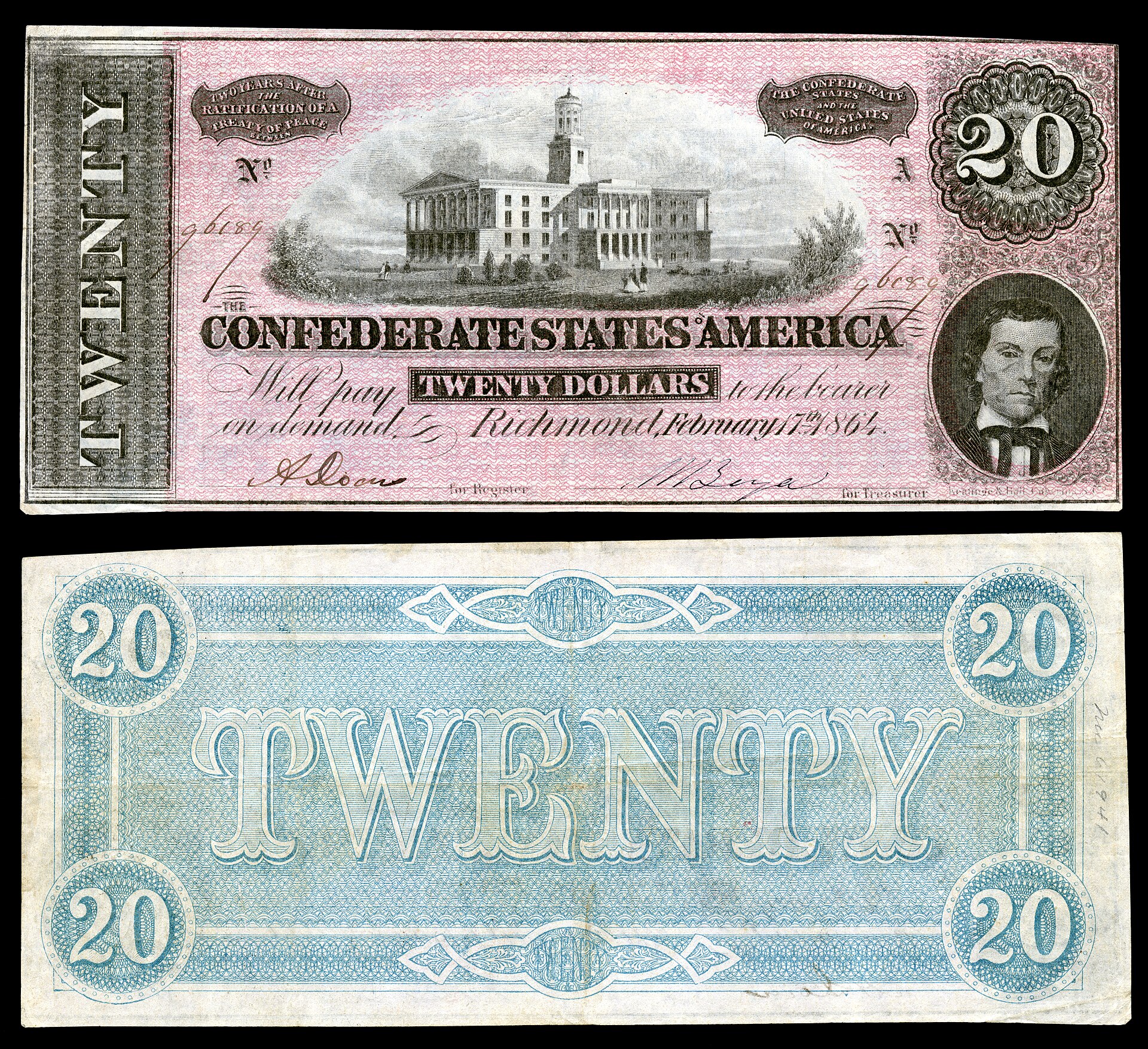
And then there is our own Civil War. In 1862 a Philadelphia shopkeeper named Samuel C. Upham began selling "fac-simile" Confederate notes as souvenirs, a penny apiece at first, with a little strip at the bottom that carried his name and address. Cotton smugglers trimmed off the strip and spent the notes in the South. Economist Marc D. Weidenmier, in a Business History Conference paper, found that Upham printed about $15 million in Confederate facsimiles between June 1862 and August 1863. Up North, the Union was issuing greenbacks, and fakes of every kind were in circulation. The U.S. Secret Service, created in 1865 as a bureau of the Treasury, says that by the end of the war nearly one-third of all currency in circulation was counterfeit. That is the Service’s own figure. The agency was not born to walk beside presidents. It was born to defend confidence in the money itself.
The press moved onto the wires
The forger’s press has not gone away, but it is no longer the only shop in town. The new way to rattle a system is to get inside the pipes that move money, or to knock them down for a while.
In February 2024, a ransomware attack hit Change Healthcare, a major U.S. clearinghouse for medical claims and payments. The Department of Health and Human Services called the impact unprecedented. Pharmacies, hospitals, and doctors’ offices found that billing and payments they took for granted had simply stopped. A later HHS breach tally, reported by Reuters in August 2025, put the number of people affected at about 192.7 million. That is a reminder of how many ordinary payments now live on somebody else’s server.
In late January 2023, a cyber incident at ION Cleared Derivatives, a third-party provider in the futures and clearing world, left some firms scrambling. The Commodity Futures Trading Commission said the episode delayed required data and postponed the weekly Commitments of Traders report until the information could be validated.
In July 2025, Reuters reported that a cyberattack on a Brazilian financial-technology provider, C&M Software, affected reserve accounts of some financial institutions. Brazil’s central-bank president, Gabriel Galípolo, later told Valor International that the attackers used stolen employee credentials — social engineering, not a break-in to the central bank’s own systems, which he said remained intact. I will say this . . . when the public hears that reserve accounts were touched, even through a vendor’s password, confidence is the thing that gets tested first.
I do not know who will try the next one, and I will not pretend to. Attribution is often argued over, and it is usually wiser to wait than to point. The target is not only the money. The target is whether people still trust the system that moves it.
You can’t hack a silver dollar
Here is what i keep coming back to. A gold coin or a silver dollar in your hand cannot be frozen by a server outage. Nobody can hack it from a long way off. A forger’s press cannot devalue the metal in it, even if a fake can still fool a careless buyer, which is why authenticity still matters. Paper can be copied. A password can be stolen. Confidence can be shaken in an afternoon. The metal is not magic, and it can go down in price like anything else . . . but it does not have to ask a network’s permission to exist.
That is not a reason to be afraid, and it is not a reason to sell the farm. It is a reason to be prepared, in proportion, with something real you have checked and can hold. If you have inherited old paper, or a box of coins, or a few bars you have been meaning to understand, do not clean them, and do not assume a photograph is enough. Bring them to someone who will look at them in the light and tell you the truth.
I’m in this business because I like history you can hold, and because families sleep a little better when some of what they own does not disappear when the lights flicker.
If you’ve got questions about a collection, an inherited box, or a coin or bar you’re not sure is genuine, come see me at King Philip Coin, 6821 Southpoint Dr N #228, Jacksonville, FL 32216. Call (904) 580-6543 or visit https://kingphilipcoin.com. Monday through Saturday, 12:30 to 5:00. Appointments preferred, walk-ins welcome.
This is not investment advice . . . think for yourself.