A working man puts his pay in the bank because he has already earned it. As far as he’s concerned, that ought to be the hard part. He didn’t sign up to finance somebody else’s connections.
Then the doors close, the app quits . . . and suddenly his money is a complicated matter. The bills, of course, remain pretty straightforward.
That’s what troubles me about Paraguay’s ueno bank. More than a weak balance sheet, this is a warning about financial power, political power and the people supposed to supervise both getting too comfortable together. The family outside that circle learns something unpleasant: the money may be theirs by law, but somebody else controls the door.
It’s also why I believe personally held gold and silver belong in the preparation conversation. Authentic metal, owned outright, isn’t a banker’s debt or a politician’s promise. Before we talk about restoring confidence, let’s ask why ordinary people should have lost it.
The trouble started before the app went dark
Paraguay’s judiciary confirms that the central bank ordered ueno into resolution on November 2. But that wasn’t the beginning of the trouble.
AP’s November 5 reporting, citing ABC Color, says inspectors found risky insider lending in June: loans to companies connected to the bank’s owners, beyond legal limits and without adequate collateral. AP also reports that President Santiago Peña defended the bank and its supervision as recently as October.
According to that report, regulators subsequently found poorly documented lending and expenses wrongly counted as assets. Correcting the books pushed the capital cushion below half the legal minimum.
Now, a balance sheet doesn’t improve because somebody important vouches for it. So when were those warnings escalated? Who approved continued lending? Who signed the accounts? And why were public institutions keeping substantial money there while concerns were mounting?
Those aren’t rude questions. They’re overdue ones.
Follow the authority. Then follow the money.
Peña had held a stake in ueno’s holding company until March 2025. Former central bank chief Carlos Carvallo previously headed the lender’s predecessor. Reuters reported those relationships, along with the central bank’s position that Carvallo recused himself from decisions concerning ueno.
Fine—examine the recusal. But examine what happened, too. A safeguard on paper isn’t the end of an investigation.
Reuters reported November 7 that prosecutors charged Peña with breach of trust and administration for personal gain, alleging he influenced public bodies to keep money at ueno despite financial ties. Carvallo was also charged, including over allegedly false public documents. A judge then ordered both held in pretrial detention. Reuters reported November 13 that prosecutors added a criminal-association charge against Peña, Carvallo, three former central bank board members and the former banking regulator. On November 16, a judge ordered Peña moved to a military prison. Both have denied wrongdoing; charges are not convictions.
Who benefited? The reported connected borrowers got financing; the bank got public deposits. Those are advantages worth tracing, not proof of who pocketed unlawful profits. That requires loan files, beneficial-ownership records, payment trails and testimony. Suspicion doesn’t do the bookkeeping.
Who carried the first burden is easier to see: people unable to reach their savings, workers waiting for wages, businesses with payments stopped. They didn’t need a verdict to feel the interruption.
What the news tells us—and what we still have to ask
I checked mainstream reports rather than assuming they all missed the story. AP reported insider lending, earlier warnings and political proximity. Reuters reported alleged interference with public deposits. AFP reported protests, pensioners, arrests and payment conditions. Calling all that a cover-up wouldn’t be honest.
Still, a replacement president or a reimbursement count doesn’t settle the family’s question: what do we do when the institutions supposed to protect us become part of the risk?
AFP carried the new president’s promise of full compensation. That’s a promise reported, not an outcome proved. You can put an assurance in the evidence file. You can’t put it down as money received.
That’s where i keep coming back to the same thing: who controls your access while everyone is working on a solution?
Doubt doesn’t stay politely in one bank
This isn’t proof every Paraguayan bank has failed. It shows how one bank’s failure can become a national argument over whether the people in charge deserve trust.
AP reported that customers rushing to open accounts elsewhere overwhelmed other banks’ apps. One institution’s trouble became another’s operational headache before it became another’s credit loss.
Here’s how I see the larger danger. People start by asking whether their bank is sound. Then they ask whether the watchdog is independent. Money starts looking for another institution, another currency, another country—or somewhere outside financial intermediaries altogether. Where it goes depends on circumstances. It doesn’t automatically go into gold, and no Paraguayan bullion-buying surge has been established here.
These questions travel well: Who gets favorable treatment? Were warnings acted upon? Can pensions and payrolls keep moving? Who absorbs losses after the cameras leave?
And if the answer is government backing, ask about the backer. A sovereign guarantee is still a government obligation, not everyone’s purchasing power piled safely in a room. War, heavy debt and political paralysis can strain that promise. That’s a risk to consider—not proof sovereign debt caused ueno’s failure, or that an American default is inevitable.
A reimbursement isn’t a time machine
ABC Color reported November 11, citing the central bank, that 1,812,348 eligible customers had received an advance from the deposit guarantee fund—about 3.99 trillion guaraníes, or roughly $645 million. That first stage covers up to 40 minimum wages per depositor. I’m glad for those families. But that doesn’t mean every depositor is whole, or that lost business and worry have been repaid.
Local reporting describes a second stage still being prepared to complete coverage up to the legal limit of 75 minimum wages, with amounts above that depending on recoveries from the bank’s assets. Some accounts also remained blocked pending paperwork. On November 16, savers over that cap were protesting outside the central bank. Progress, yes. Problem over? Not yet established.
On November 18, after meeting with lawmakers and savers, the central bank’s president said the failed bank’s healthy assets are enough to return 100% of deposits, including those above the cap, Diario HOY reported, and the central bank gave itself until December 2 to finish guarantee payments, ABC Color reported. The next day, the central bank said it was still checking those assets one by one before offering them to other banks, ABC Color reported. Amounts, dates and how it gets paid are still to come. A promise reported still isn’t money received.
Americans have FDIC protection for eligible deposits, subject to coverage rules. Understand it. Just don’t mistake it for protection against every interruption, investment loss or decline in purchasing power.
Insurance can repay a covered balance. It can’t give a small business back the Tuesday it needed to make payroll.
Why holding it matters
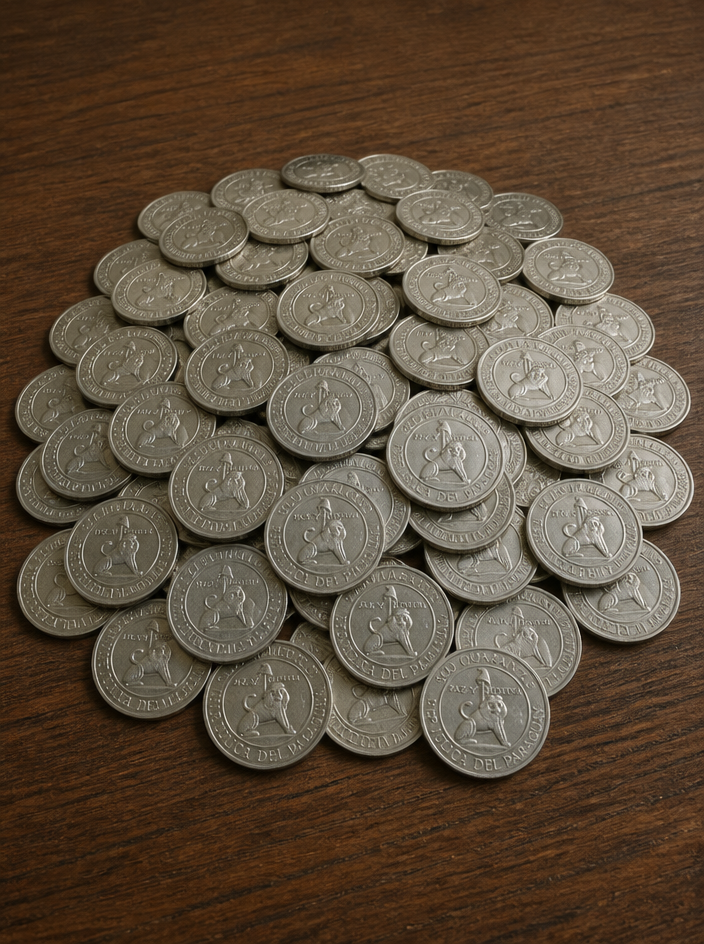
“If you don’t hold it, you don’t own it” puts a working man’s finger on an important distinction: ownership isn’t the same as immediate control.
A bank deposit is a legal claim against a bank. Cash in your hand isn’t a deposit waiting to be released. And outright-owned gold or silver in your possession is neither a commercial bank’s liability nor a government’s promise to repay. No issuer has to stay solvent for that metal to exist.
That’s the attraction. Not a promise that the price only goes up.
To be clear, properly allocated metal held by a custodian can be legally yours; an unallocated balance is a contractual claim. Personal possession takes somebody else’s custody and release decisions out of the holding. It also puts security squarely on you.
Nor is everything on a screen the same thing. A central-bank digital currency is a central-bank liability, unlike a commercial-bank deposit. A private stablecoin depends on its particular backing and redemption arrangements. Bitcoin is different again. Digital access raises questions about infrastructure, custody and rules; it doesn’t make these assets legally identical, or automatically doomed.
Prepare while it’s still your choice
My outlook is that debt pressure, political division and geopolitical conflict could strengthen demand for tangible assets over the years ahead. I take the possibility of a prolonged commodity upswing seriously. That isn’t a guaranteed timetable, and it’s certainly not permission to buy at any price.
Start closer to home. Could you meet essential expenses if one account became unavailable? Have another way to pay, some securely kept cash, records your family can find? With bullion, do you understand the weight, purity, purchase premium, resale spread and storage?
Gold and silver can fall sharply. Costs and fraud matter. So do theft, fire and counterfeit metal. Borrowing to buy a reserve can leave you with one more obligation . . . which rather misses the point.
Faith and prudence aren’t enemies. We can pray for peace and still make sensible provision for our families.
Paraguay’s warning isn’t to spend tomorrow frightened. It’s to stop confusing somebody else’s reassurance with your own preparation.
For questions about inherited coins, gold and silver bullion, buying or selling, or appraisals, visit King Philip Coin in Jacksonville or call (904) 580-6543.
This is not investment advice . . . think for yourself.