On Monday I told you the Pilgrims came over on borrowed money. Yesterday we looked at what they used for cash, which was mostly corn, beaver and shells. Today, the day before Thanksgiving, is the end of the story. Who actually paid the bill, and how long did it take?
The short answer: a handful of Plymouth men signed their own names to the whole colony’s debt, and it took them close to twenty years to get clear of it.
Six years in, the partnership was broke
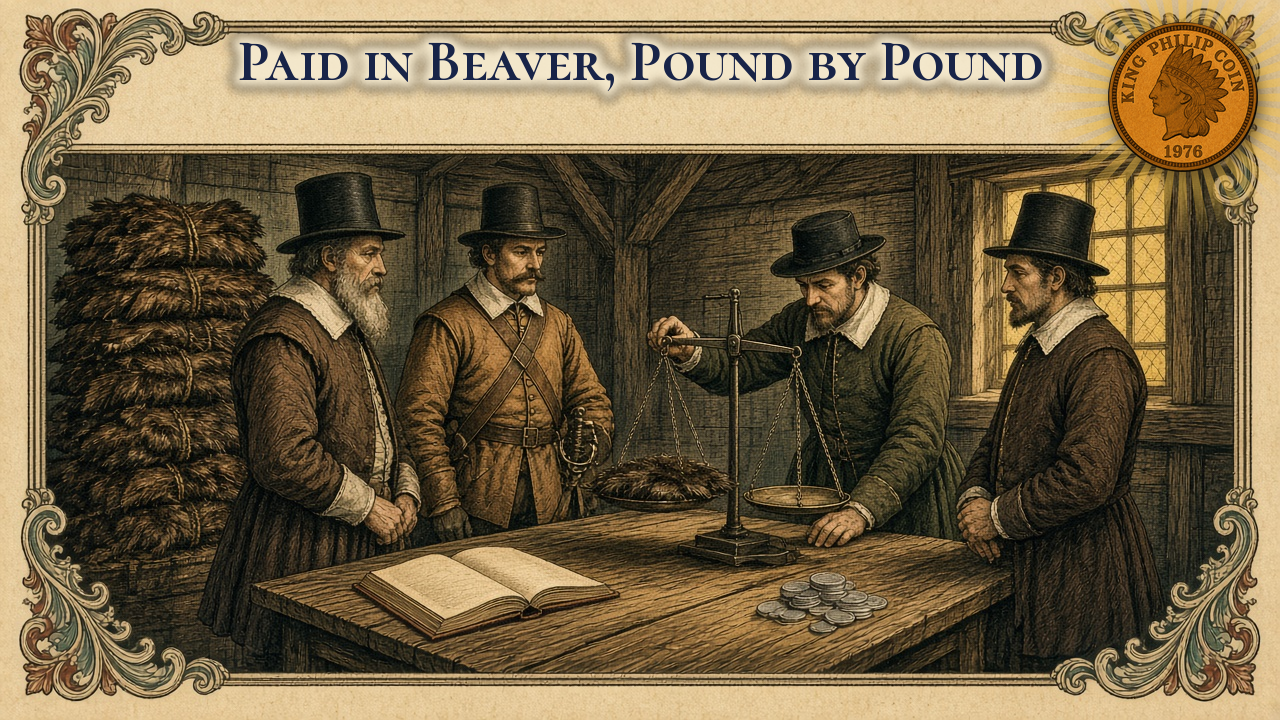
You’ll remember the 1620 deal. Settlers and London investors would share everything for seven years, and at the end the investors were to get half. By the mid-1620s that deal had gone sour on both ends. Ships and cargoes had been lost, the colony was borrowing at 50 percent and paying 70 percent markups on goods, and the investors weren’t seeing any money either. Pilgrim Hall Museum puts it simply: the debt “quickly became much larger” and was renegotiated in 1626. Pilgrim Hall Museum
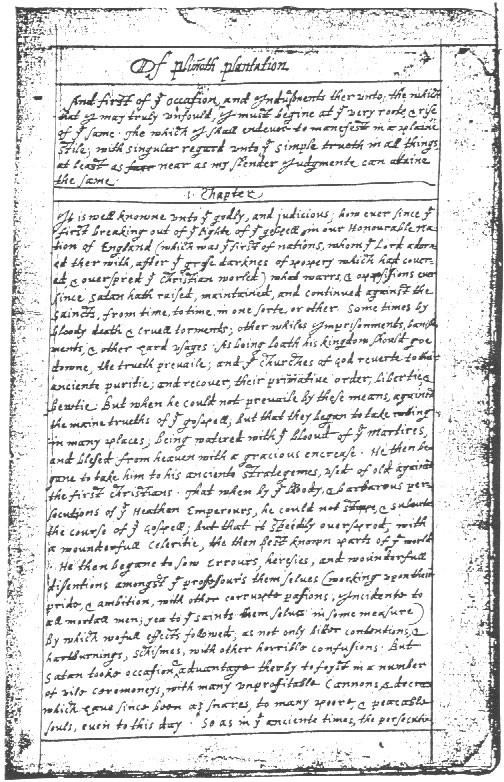
That year the colony sent Isaac Allerton to London to make what Bradford calls “a composition with the adventurers, upon as good term as he could.” Myles Standish had already laid some groundwork the year before. Bradford, Anno 1626
The buyout
Allerton came home with a deal signed in London on November 15, 1626. The investors would sell the planters all their shares, land and goods in the colony. In return, Plymouth would pay them £1,800, in installments of £200 a year, on the feast of St. Michael (late September), at the west side of the Royal Exchange in London. The first payment was due in 1628. Bradford, Anno 1627
Nine years of payments, and the paper had teeth. If they missed a date, the bargain called for a forfeit of 30 shillings a week.
Bradford is honest that nobody knew how they’d pay it. The colony approved the deal “though they knew not well how to raise the payment,” and then “7 or 8 of the chief of the place became Jointly bound for the payment of this £1800 (in the behalf of the rest).” He adds, “In which they ran a great adventure.” Bradford, Anno 1627
Here’s the working-guy translation. Seven or eight men co-signed for the whole town.
The Undertakers
In July 1627 those men made it formal. The colony signed an agreement with William Bradford, Myles Standish, Isaac Allerton and their partners, who came to be called the Undertakers. The Plymouth eight were Bradford, Standish, Allerton, Edward Winslow, William Brewster, John Howland, John Alden and Thomas Prence. Four London men joined them: James Sherley, John Beauchamp, Richard Andrews and Timothy Hatherley. Bradford, Anno 1627, Pilgrim Hall Museum
The deal went like this:
- The Undertakers took on the £1,800, plus “all the rest of the debts that then Lay upon the plantation, which was about some £600 more.”
- In exchange they got “the whole trade” of the colony for six full years, along with the colony’s pinnace, its boat at Manomet, a shallop called the Bass-boat, and the store of “furs, fells, beads, corn, wampumpeag, hatchets, knives.”
- Every purchaser in the colony owed them “3 bushels of corn, or 6 lbs. of Tobacco” a year.
- The Undertakers would bring over £50 a year of hose and shoes, “to be sold unto them for corn at 6 s per bushel.”
- At the end of the six years, the whole trade went back to the colony.
The heads of families and single free men, 53 in all, became the new owners of the colony. They were known as the Purchasers. Pilgrim Hall Museum The few cattle were divided “a cow to 6 persons or shares, & 2 goats to the same,” and each share got 20 acres of tillable land. Bradford, Anno 1627, with the editors’ notes
Back in 1624 each person had been given a single acre to plant, “and they had no more till the 7 years were expired.” Bradford, Anno 1624 Now, after seven years of a common stock, Plymouth families finally owned their cattle and a real share of the land. That matters to me more than any number in this story.
Corn into fur, fur into hats
So how do you pay London with no gold and no silver? You trade. Pilgrim Hall explains that the colonists grew corn and traded it for furs with Native communities in Maine. The furs were shipped to England and sold at auction to hatters, who shaved the wool off the pelts and felted it into fashionable, expensive beaver hats. Pilgrim Hall Museum
That’s the whole economy in one line. Corn bought fur, fur paid the debt, and a London gentleman wore the debt on his head.
Then the partners made it worse
You’d think that would be the end. It wasn’t. Allerton, still acting as the colony’s agent in England, got tangled up with some of the London partners in two ships, the White Angel and the Friendship. The Plymouth men protested that neither ship was their doing. James Sherley and the London side put both on the general account anyway, “which caused continual contention between them,” Bradford wrote. Bradford, Anno 1631
When the 1631 account finally came over, Plymouth’s partners found themselves debtors for £4,770 19s 2d, “besides £1000 still due for the purchase yet unpaid, notwithstanding all the beaver.” On paper, they now owed far more than the £1,800 they’d bargained for. Bradford, Anno 1631
12,150 pounds of beaver
They kept shipping fur. Bradford listed every load sent to London from November 1631 to June 1636. It added up to 12,150 pounds of beaver and 1,156 otter skins. Coat beaver usually sold for 20 shillings a pound. Bradford figured the beaver alone “came to little less than £10000 sterling,” and the Plymouth men believed their debts “had been paid, with advantage or Interest.” But London wouldn’t send a proper accounting. Bradford, Anno 1636
Six tons of beaver, and still no “paid in full.” Anybody who’s paid on a store card for ten years knows that feeling.
Paid in full, finally
The end came slow. On October 15, 1641, through a go-between named John Atwood, the Plymouth partners agreed to pay £1,200 “In full satisfaction of all demands”: £400 within two months, and the rest at £200 a year. Bradford, Winslow and their Plymouth partners put themselves under a £2,400 bond to make good on it. Bradford, Anno 1641
In 1642, James Sherley wrote to them that it was “the final end & conclude of that tedious, & troublesome business, & I think I may truly say uncomfortable, & unprofitable to all.” Bradford, Anno 1642
Even that wasn’t quite the last of it. Beauchamp held out for £400. Plymouth’s colony records for March 1645 (by the calendar they used then) show the Undertakers settling his demand by signing over land. Pilgrim Hall Museum
From the buyout in 1626 to that last land deal is close to twenty years. Pilgrim Hall’s bottom line on the original investors: they may have put in as much as £7,000, the colonists eventually repaid the £1,800 buyout, and “Plymouth Colony was not a success for the investors.” Pilgrim Hall Museum What the Undertakers actually shipped and paid out before they were clear, in beaver, settlements and land, was a good deal more than £1,800, though nobody has left us a clean total. Nobody got rich on this. The colonists got their freedom and paid dearly for it.
What I take from it
Three things stick with me.
First, debt outlives the people who meant well. Weston promised he’d never quit, and he quit. Allerton was one of their own, and his dealings still tangled the accounts for years. Good intentions don’t show up on a balance sheet.
Second, the men who fixed it put their own names on the line. They didn’t wait for London to be fair. They took the risk on themselves, and they kept shipping beaver for years without knowing where they stood. Thats not a financial strategy. It’s character.
Third, the only thing that ever really pays a debt is something real. Corn, fur, land, labor. Paper only moves the debt around. I’m not telling anybody what to do with their money, and gold and silver go down as well as up. But there’s a reason folks who’ve lived through hard times like owning a little something outright, free and clear, that nobody else holds the paper on.
So tomorrow, when you sit down to the table, remember the Undertakers. They gave thanks in 1621 still owing on the boat ride, and they kept at it for twenty-odd years until it was paid. Maybe the most American thing about Thanksgiving isn’t the turkey. Maybe it’s being grateful while you’re still working your way out from under the bill.
Thank you for reading all three parts this week. Happy Thanksgiving from my family to yours.
If you’ve got old coins, an inherited collection, or a family piece you’ve always wondered about, come see me at King Philip Coin, 6821 Southpoint Dr N #228, Jacksonville, FL 32216. Call (904) 580-6543 or visit https://kingphilipcoin.com. Monday through Saturday, 12:30 to 5:00. Appointments preferred, walk-ins welcome. Free verbal appraisals, no obligation, coins examined in hand. If you inherited a collection, start at our inherited coin collection page.
This is not investment advice . . . think for yourself.